Best Tech Stack for SaaS Startups
A grounded guide to choosing the best tech stack for SaaS startups, including tradeoffs around speed, cost, hiring, and future change.
Key Takeaways
- 01
The best tech stack for SaaS startups is usually the one a team can ship and maintain quickly.
- 02
Hiring flexibility and ecosystem maturity matter as much as raw framework features.
- 03
Boring defaults are often an advantage at the startup stage.
- 04
Do not optimize for speculative scale too early.
- 05
A clear architecture helps new team members move faster later.
Best Tech Stack for SaaS Startups matters because buyers and founders need a clear answer, not a vague range or a stack of agency buzzwords. This guide explains best tech stack for SaaS startups in a commercially realistic way so you can make better product, budget, and delivery decisions.
The short version: the best stack is usually the one your team can ship and maintain confidently, not the one with the most hype or the most theoretical flexibility.
Quick answer
best tech stack for SaaS startups should be evaluated through scope, delivery risk, and business usefulness, not just a headline number or trend-driven opinion.
- Use boring, well-supported defaults unless your product needs something unusual.
- Hiring and maintainability matter as much as raw framework features.
- A stack choice should speed up shipping, not increase founder anxiety.
Who this guide is for
This guide is for startup teams choosing a practical stack for a new SaaS product, dashboard, portal, or internal platform.
How startup teams should evaluate a stack
Stack choices are rarely permanent, but they do shape speed and hiring. Early teams should prefer mature ecosystems, strong documentation, and patterns that new engineers can understand quickly.
The winning stack is often a default stack chosen deliberately: proven enough to move fast, flexible enough to evolve, and boring enough to avoid unnecessary heroics.
| Layer | Common startup choice | Why teams choose it |
|---|---|---|
| Frontend | Next.js or React | Fast iteration and strong ecosystem |
| Backend | Node.js or Python | Good developer availability and tooling |
| Database | PostgreSQL | Reliable default for SaaS data models |
| Cloud | Vercel plus AWS or similar | Fast launch with room to grow |
Building a SaaS product requires more than just a good idea. One of the most important technical decisions startups must make early is choosing the right technology stack.
The tech stack defines how the product is built, how scalable it will be, and how easily new features can be added in the future. A well-chosen tech stack allows startups to build faster, maintain the platform efficiently, and scale as user demand grows.
This guide explains the best tech stack options for SaaS startups and how founders should approach technology decisions before development begins.
What Is a Tech Stack?
A tech stack is the combination of technologies used to build and run a software product. It includes frontend frameworks, backend technologies, databases, cloud infrastructure, and supporting tools.
Each layer of the stack plays a specific role in how the product functions, how data is processed, and how users interact with the application.
Choosing the right stack ensures that the platform remains scalable, maintainable, and secure as the product grows.
Frontend Technologies for SaaS Startups
The frontend is the part of the application users interact with. It controls the user interface, navigation, and overall user experience.
Popular frontend technologies for SaaS startups include:
- React – One of the most widely used frontend libraries for building dynamic interfaces.
- Next.js – A React framework that adds routing, server-side rendering, and performance optimization.
- Vue.js – A flexible framework known for its simplicity and ease of integration.
Among these options, React and Next.js are commonly chosen for SaaS products due to their strong ecosystem and scalability.
Backend Technologies
The backend handles application logic, authentication, APIs, and data processing. It is responsible for managing how the application works behind the scenes.
Common backend technologies for SaaS startups include:
- Node.js – Ideal for building scalable APIs and real-time applications.
- Python (Django / FastAPI) – Widely used for rapid development and data-driven applications.
- Ruby on Rails – Popular for startups that need fast product development.
Node.js is frequently used in SaaS products because it allows full-stack JavaScript development and efficient API performance.
Database Options
Databases store and manage application data. Choosing the right database depends on the structure and scale of the application.
Common database choices include:
- PostgreSQL – A powerful relational database suitable for complex SaaS products.
- MongoDB – A NoSQL database often used for flexible data structures.
- MySQL – A traditional relational database used in many applications.
PostgreSQL is often preferred for SaaS products due to its reliability and strong query capabilities.
Cloud Infrastructure
SaaS products rely heavily on cloud infrastructure to handle scalability and availability. Cloud services allow startups to launch quickly without managing physical servers.
Popular cloud platforms include:
- AWS – Offers scalable infrastructure, storage, and serverless services.
- Google Cloud – Provides data processing and cloud computing tools.
- Microsoft Azure – Commonly used by enterprise SaaS products.
Cloud infrastructure allows SaaS products to scale automatically as the number of users grows.
Authentication and Security
Security is essential for SaaS products that handle user data and authentication. Modern SaaS applications typically implement secure login systems and access control.
Common authentication approaches include:
- OAuth authentication
- JWT-based authentication
- Role-based access control
Strong authentication systems protect both the application and user data.
DevOps and Deployment Tools
DevOps tools help teams deploy updates, monitor performance, and maintain infrastructure efficiently.
Important DevOps tools for SaaS startups include:
- Docker for containerization
- CI/CD pipelines for automated deployments
- Monitoring tools for performance tracking
Automation allows development teams to release updates faster while maintaining system stability.
Example SaaS Tech Stack
A common modern SaaS stack might include:
- Frontend: Next.js + React
- Backend: Node.js + Express
- Database: PostgreSQL
- Infrastructure: AWS
- Authentication: JWT + OAuth
This combination provides strong scalability, performance, and development flexibility.
Factors to Consider When Choosing a Tech Stack
Before selecting technologies, startups should consider several factors:
- Product complexity
- Development speed
- Team expertise
- Scalability requirements
- Security needs
Choosing familiar technologies can often speed up development and reduce technical risk.
Common Mistakes Startups Make
Some startups choose technologies based only on trends rather than long-term maintainability. This can lead to scalability problems later.
Common mistakes include:
- Choosing overly complex technologies
- Ignoring scalability requirements
- Using too many frameworks at once
- Not planning infrastructure early
A balanced and stable stack is usually better than experimenting with too many new technologies.
Conclusion
The right tech stack can significantly impact the success of a SaaS startup. Choosing scalable technologies, reliable infrastructure, and efficient development tools helps startups build products faster and scale confidently.
By focusing on stability, scalability, and developer productivity, startups can create strong foundations for long-term product growth.
A sensible startup default
For many SaaS startups, a practical default stack is Next.js or React on the frontend, Node.js or Python on the backend, PostgreSQL for the database, and managed hosting that keeps operational work modest in the first phase.
Common stack mistake
Teams often optimize for novelty instead of shipping speed. That can create hiring friction, weak documentation coverage, and more time spent taming tools than learning from users.
Stack checklist
- Choose tooling your current or near-future team can hire for.
- Prefer strong defaults with mature community support.
- Be honest about SEO, realtime, and integration needs.
- Keep the first architecture easy to explain.
- Reserve advanced patterns for proven scaling pressure.
For more planning support, see our custom software development services, software consulting support, and contact our team.
What to do next
Pick the stack that gives your team the best balance of speed and maintainability, then spend the saved time on product learning. If you want a second opinion before committing, our software consulting support and web development services can help.
Apply this in a real project
If you’re planning to build or improve software based on these ideas, our custom software development services can help you define scope, reduce delivery risk, and ship maintainable systems.
For founder-led execution, explore our product development services and software consulting services to turn requirements into a working release with clear ownership.
Expert Insights
Mature ecosystems buy time
A practical stack reduces implementation friction, hiring risk, and debugging time, which matters more than novelty for early products.
The default choice is often the strategic one
Choosing proven tools is not conservative in a bad way. It often creates the fastest path to product learning.
Frequently Asked Questions
What is a good default stack for SaaS startups?+
Should founders choose a stack based on hype?+
When should a team choose something less common?+
Does the stack matter more than product scope?+
How future-proof should the first stack be?+
Reader Questions
Should I optimize for hiring or technical elegance?
For most startups, hiring and maintainability should win unless the product has unusual technical demands.
Can I mix technologies if the team has different strengths?
Yes, but each extra technology choice adds complexity, so mix only where the benefits are meaningful.
When should infrastructure become more sophisticated?
Usually after you see real load, reliability pressure, or customer requirements that simpler setups cannot support.
Related Articles
Technology • 3 min
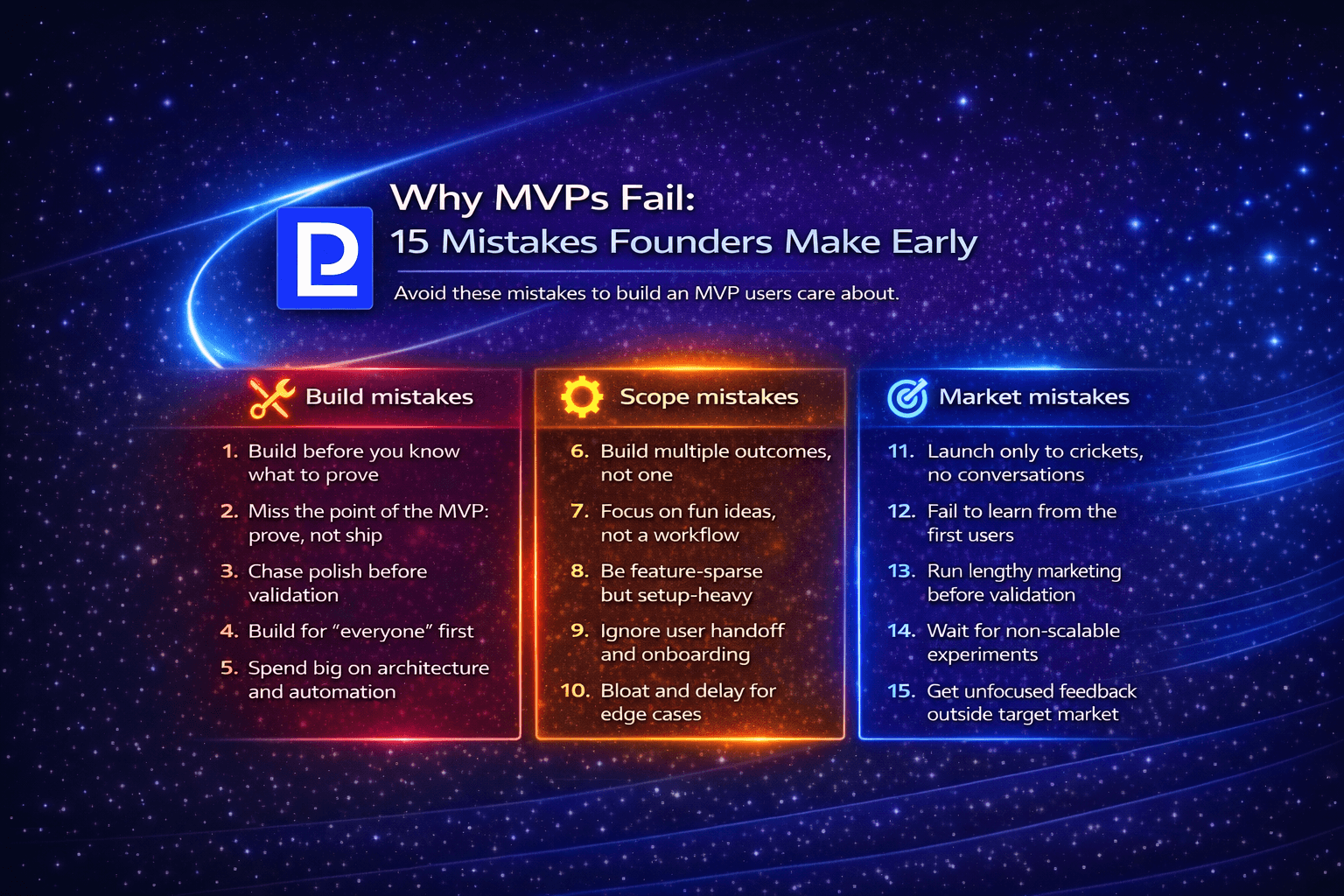
Why MVPs Fail: 15 Mistakes Founders Make Early
A founder-focused guide to the 15 most common MVP mistakes: what causes failure, how to avoid them, and how to build MVPs that actually validate.
Technology • 3 min
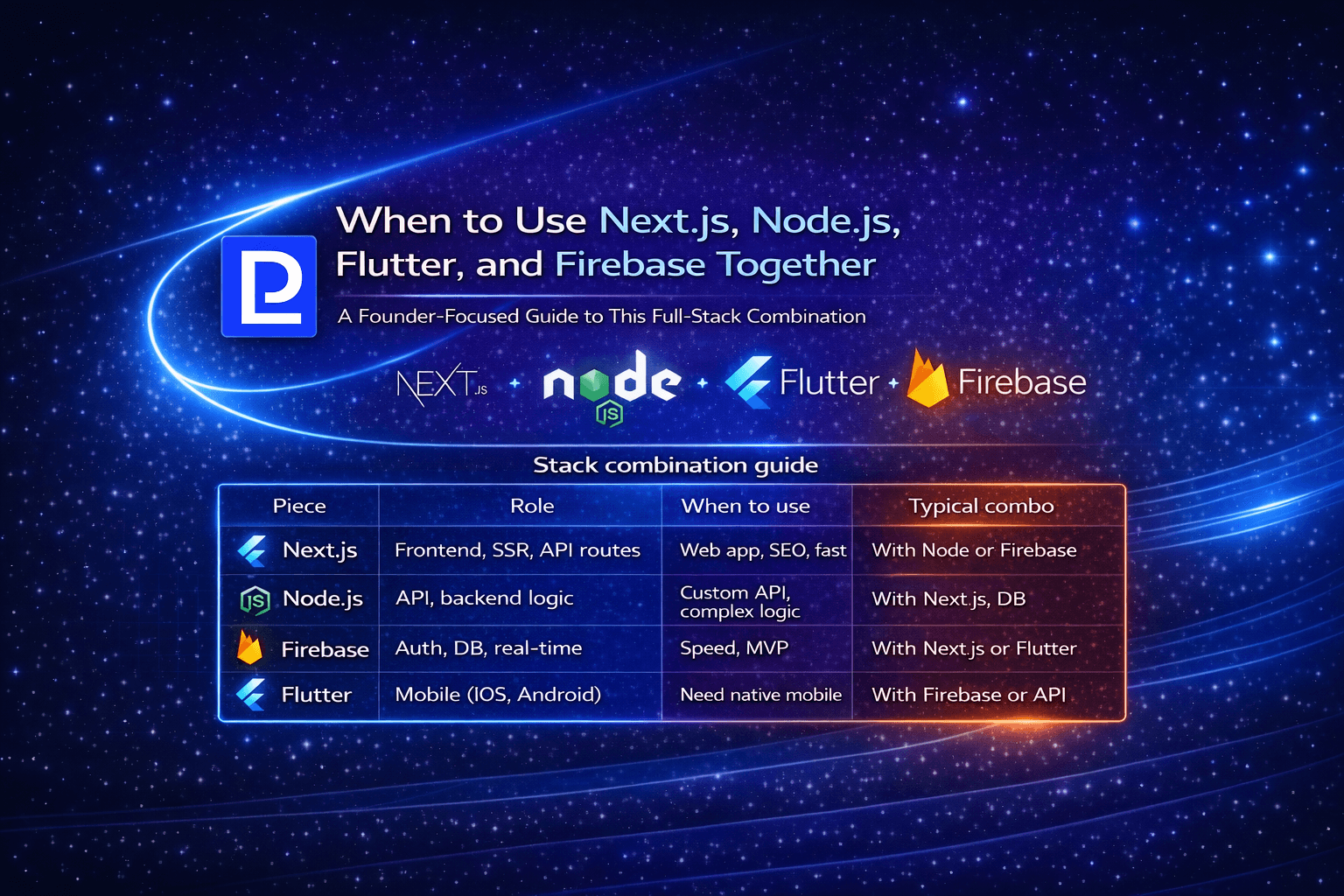
When to Use Next.js, Node.js, Flutter, and Firebase Together
A founder-focused guide to combining Next.js, Node.js, Flutter, and Firebase: when the stack makes sense and how to use them together.
Technology • 3 min
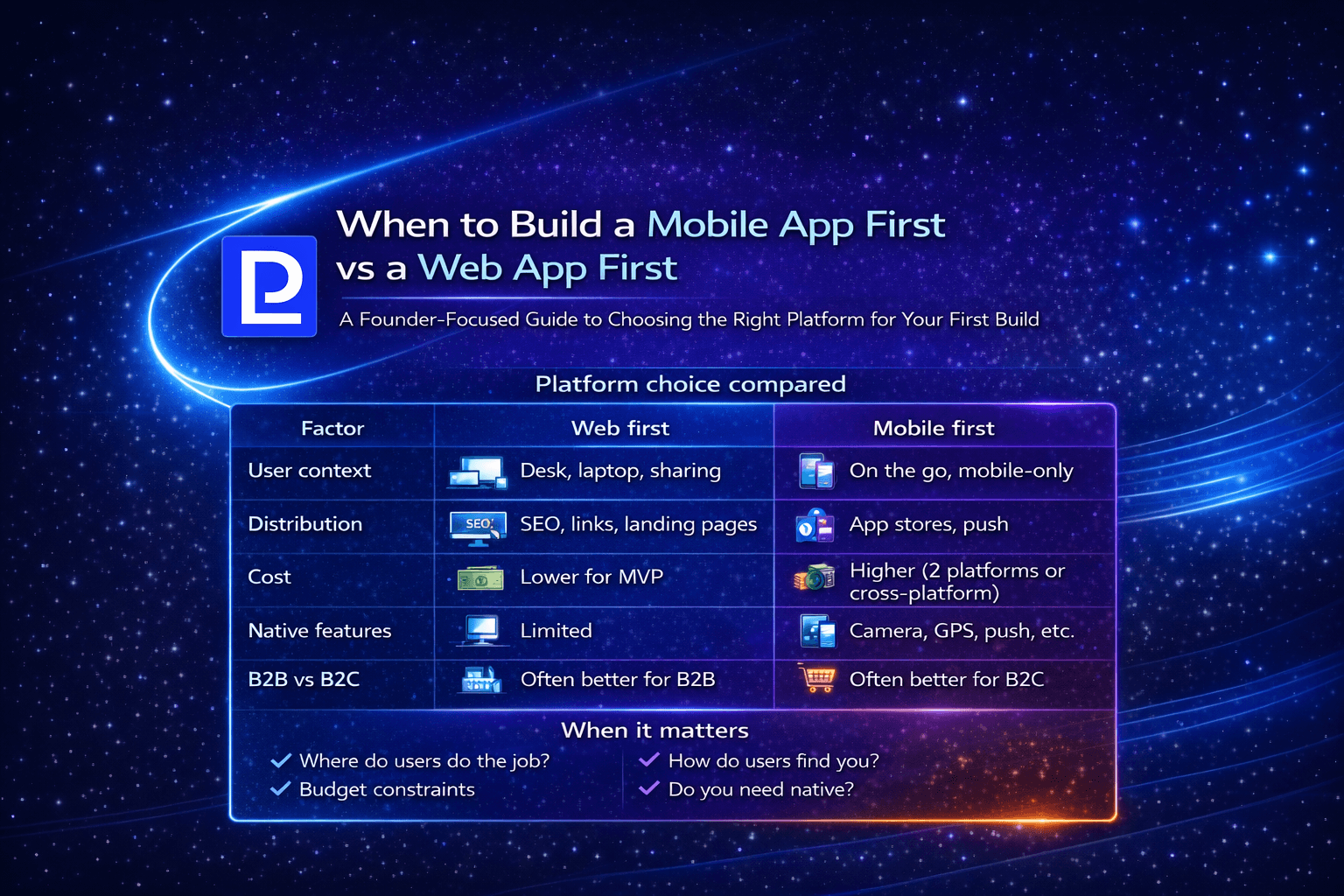
When to Build a Mobile App First vs a Web App First
A founder-focused guide to choosing mobile-first vs web-first: when each makes sense, tradeoffs, and how to decide for your product.