How to Choose Between Freelancers, Agencies, and In-House Developers
A founder-focused comparison of freelancers, agencies, and in-house developers: when each makes sense, tradeoffs, and how to decide.
Key Takeaways
- 01
Choosing the right engagement model works better when you match team structure to stage, roadmap stability, and work type.
- 02
Short answer: Freelancers for narrow work, agencies for full builds, in-house for stable ongoing work.
- 03
Strong hiring decisions come from clear tradeoffs around budget, speed, control, and coordination overhead.
- 04
Shorter, clearer sections make the article easier to scan and easier for buyers to act on.
- 05
Common founder mistake: Choosing based on cost alone without considering coordination, handoff, and total cost of ownership.
- 06
The best next step is usually to define the work type first, then match the model.
How to Choose Between Freelancers, Agencies, and In-House Developers matters because buyers do not reward software that is only technically correct. They reward software that solves a real workflow, looks credible, and is easy to evaluate. A founder-focused comparison to help you choose the right engagement model.
If you are researching hiring developers, the useful questions are practical ones: what should be built first, what should be delayed, where does the budget really move, and which tradeoffs are worth making now. That is the frame this guide uses.
Quick answer
Choosing the right engagement model works best when you match team structure to stage, roadmap stability, and the type of work you need done.
- Freelancers: best for narrow, well-defined work when you have strong product direction.
- Agencies: best for full product builds, design+dev, and when you need a turnkey team.
- In-house: best when the roadmap is stable and you need ongoing capacity.
Who this guide is for
This article is for founders and buyers deciding how to staff their first product build.
It is written to help teams choose the right engagement model for their stage and budget.
- Useful when the backlog is larger than the budget.
- Useful when the founder needs to cut scope without losing the product thesis.
- Useful when the first release must support customer conversations, pilots, or revenue.
Engagement models compared
The goal is not to create more theory. The goal is to show the tradeoffs that matter when choosing freelancers, agencies, or in-house.
| Model | Best for | Typical cost | Pros | Cons |
|---|---|---|---|---|
| Freelancers | Narrow, well-defined work | Lower per-hour, variable quality | Flexible, fast to start, lower overhead | Single point of failure, you own coordination |
| Agencies | Full product builds, design+dev | Higher, bundled | Turnkey team, design+dev, process | Less control, handoff risk |
| In-house | Stable roadmap, ongoing work | Salary + benefits + overhead | Context, ownership, long-term | Slow to hire, fixed cost |
When each model makes sense
The first release should prove something concrete: that a buyer will care, that a user will adopt the workflow, or that the product can replace a painful manual process. Without that frame, the build drifts into generic software effort.
Choose freelancers when
You have strong product direction, narrow scope, and can manage coordination. Good for prototypes, integrations, or specific features.
Choose agencies when
You need a full team (design, dev, PM), want turnkey delivery, and have budget for bundled pricing. Good for MVP builds and first launches.
Choose in-house when
The roadmap is stable, you have ongoing work, and need deep context. Good for scaling products and long-term ownership.
Common founder mistake
The common mistake is choosing based on cost alone. A cheap freelancer who cannot deliver or an agency that over-scopes can cost more than the right-fit option.
Founder note
Many founders start with an agency for the first build, then transition to in-house or freelancers once the product is stable. Custom software development partners can help bridge that transition.
Decision checklist
- Define the type of work: narrow feature vs full product vs ongoing maintenance.
- Assess your product direction strength: can you brief and review effectively?
- Consider roadmap stability: is this a one-off or ongoing?
- Compare total cost of ownership, not just hourly or project price.
- Factor in coordination overhead and handoff risk.
What to do next
If you are importing these JSON files into MongoDB, this is the content shape you want: clean headings, clear box sections, visible lists, and one practical table.
Apply this in a real project
If you’re planning to build or improve software based on these ideas, our custom software development services can help you define scope, reduce delivery risk, and ship maintainable systems.
For founder-led execution, explore our product development services and web development services to turn requirements into a working release with clear ownership.
Expert Insights
Match the model to the work
Narrow, well-defined work fits freelancers. Full product builds fit agencies. Stable ongoing work fits in-house.
Total cost of ownership matters
Hourly or project price is only part of the story. Factor in coordination, handoff, rework, and your time managing the relationship.
Many founders hybrid
Starting with an agency for the first build, then transitioning to in-house or freelancers once the product is stable, is a common and often effective pattern.
Reader Rating
Based on 1 reviews
Frequently Asked Questions
When should I choose freelancers over agencies?+
When should I choose an agency over in-house?+
When should I hire in-house developers?+
What is the biggest mistake founders make when choosing?+
Can I mix freelancers, agencies, and in-house?+
Reader Questions
How do I know if I need an agency vs a freelancer?
If you need design, dev, and PM in one team, or do not have strong product direction, an agency is usually a better fit. If you have a narrow, well-defined task and can brief it clearly, a freelancer may work.
What part of the decision should I focus on as a founder?
Focus on work type, your ability to coordinate, and total cost of ownership. The right model reduces risk and fits your stage.
How much should I budget for each model?
Freelancers: variable by skill. Agencies: typically $30K-$90K for an MVP. In-house: salary + benefits + overhead, usually $80K-$150K+ per developer annually.
Related Articles
Technology • 3 min
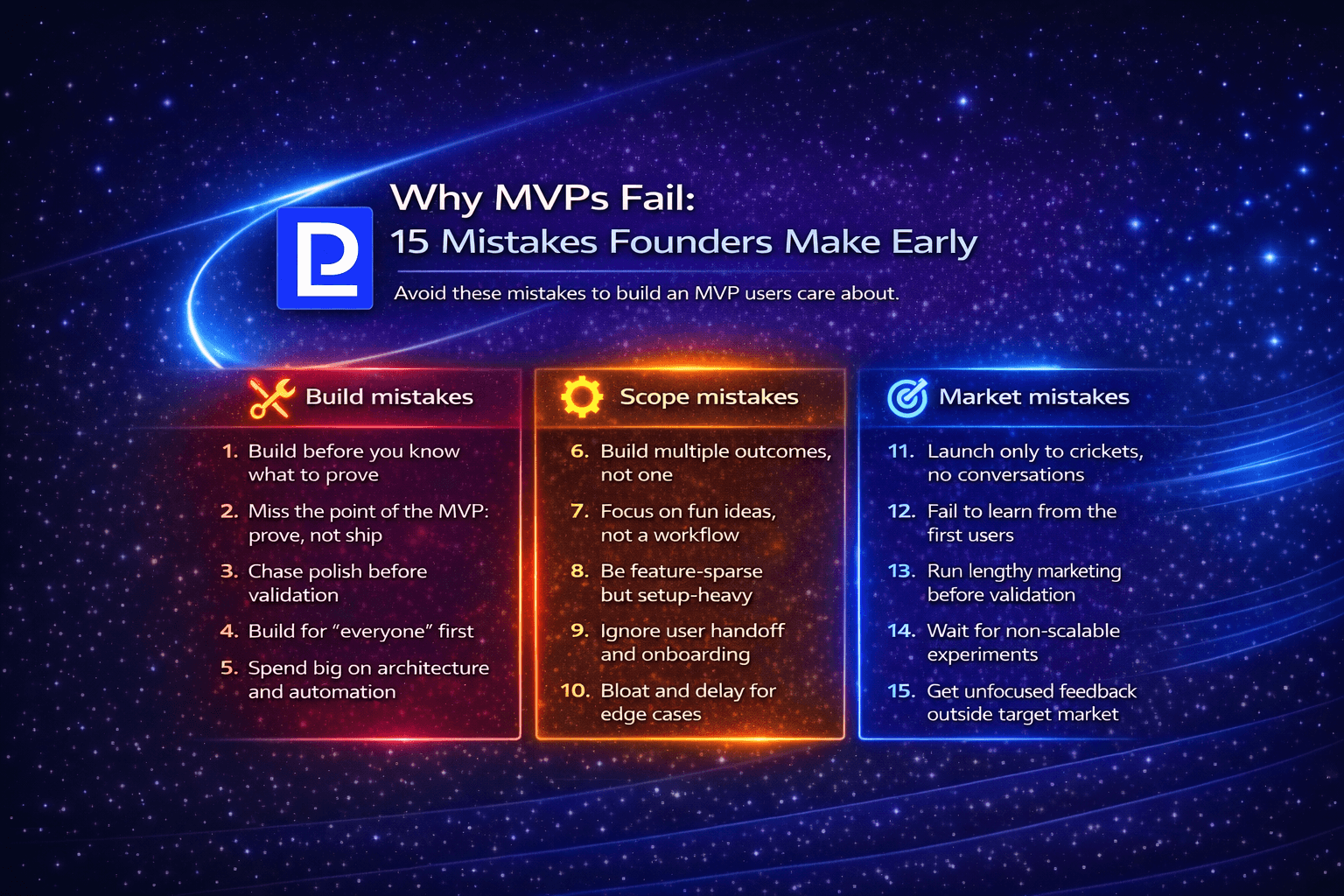
Why MVPs Fail: 15 Mistakes Founders Make Early
A founder-focused guide to the 15 most common MVP mistakes: what causes failure, how to avoid them, and how to build MVPs that actually validate.
Technology • 3 min
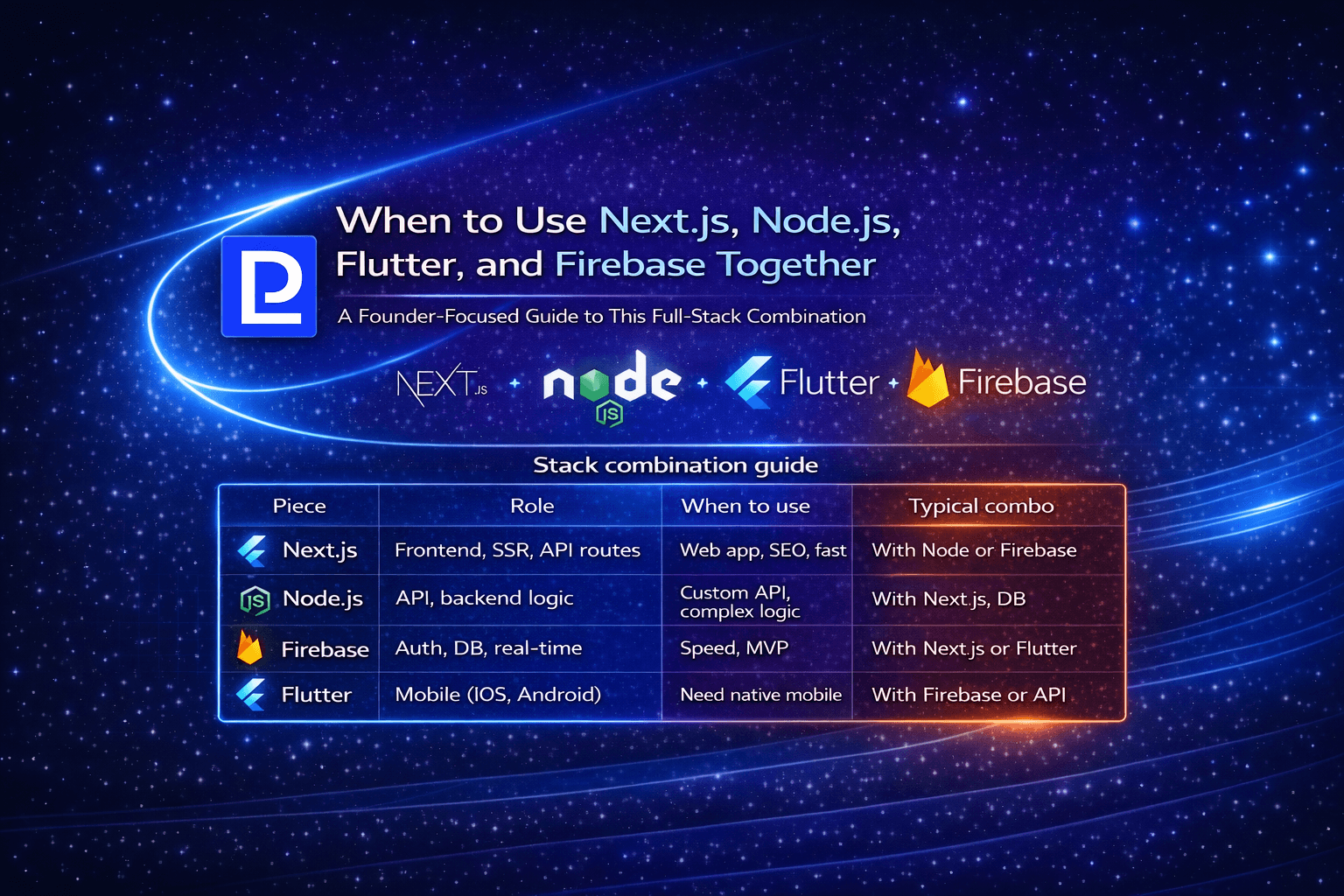
When to Use Next.js, Node.js, Flutter, and Firebase Together
A founder-focused guide to combining Next.js, Node.js, Flutter, and Firebase: when the stack makes sense and how to use them together.
Technology • 3 min
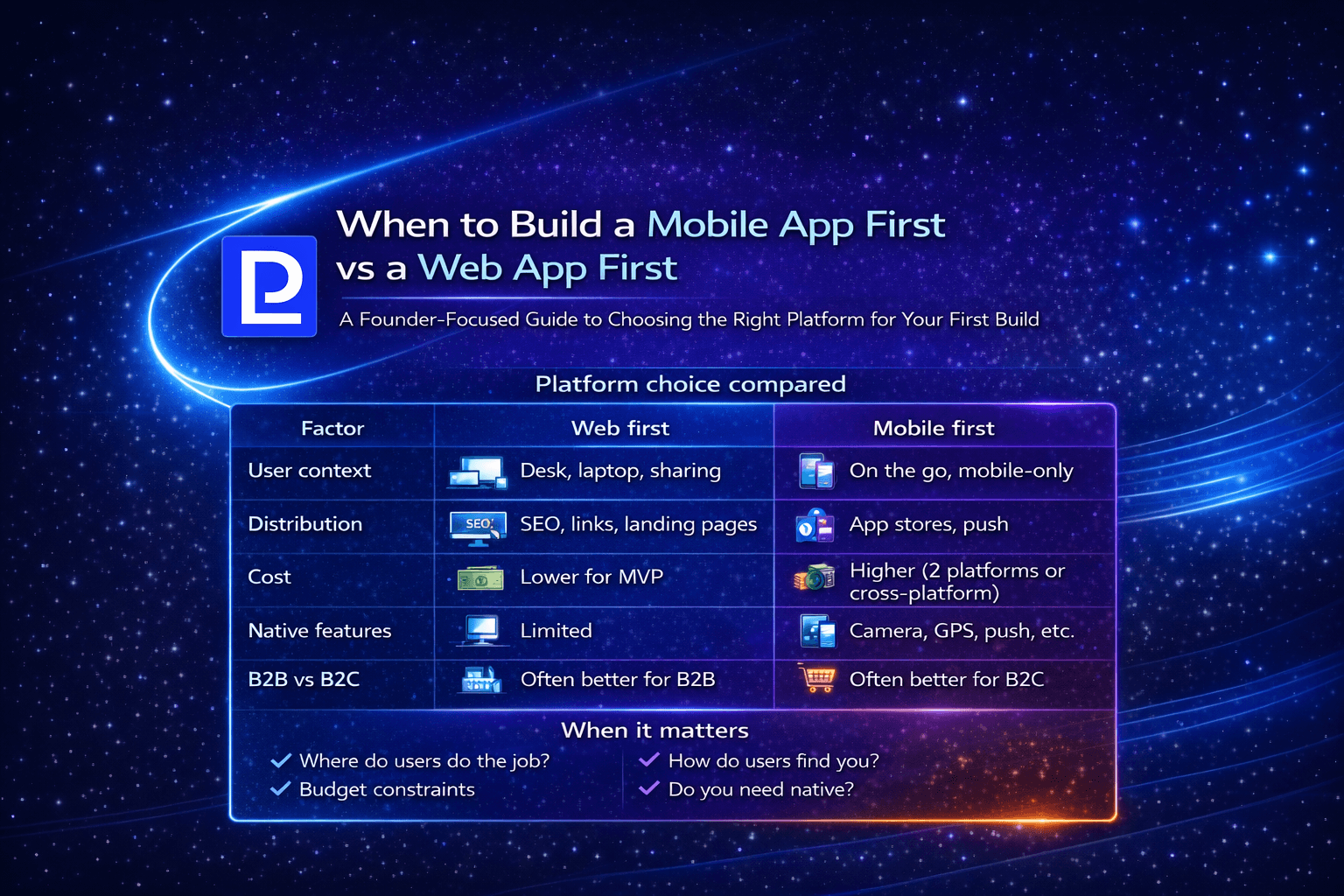
When to Build a Mobile App First vs a Web App First
A founder-focused guide to choosing mobile-first vs web-first: when each makes sense, tradeoffs, and how to decide for your product.