How to Estimate Software Development Timelines Realistically
A founder-focused guide to estimating software development timelines: what drives duration, common mistakes, and how to set realistic expectations.
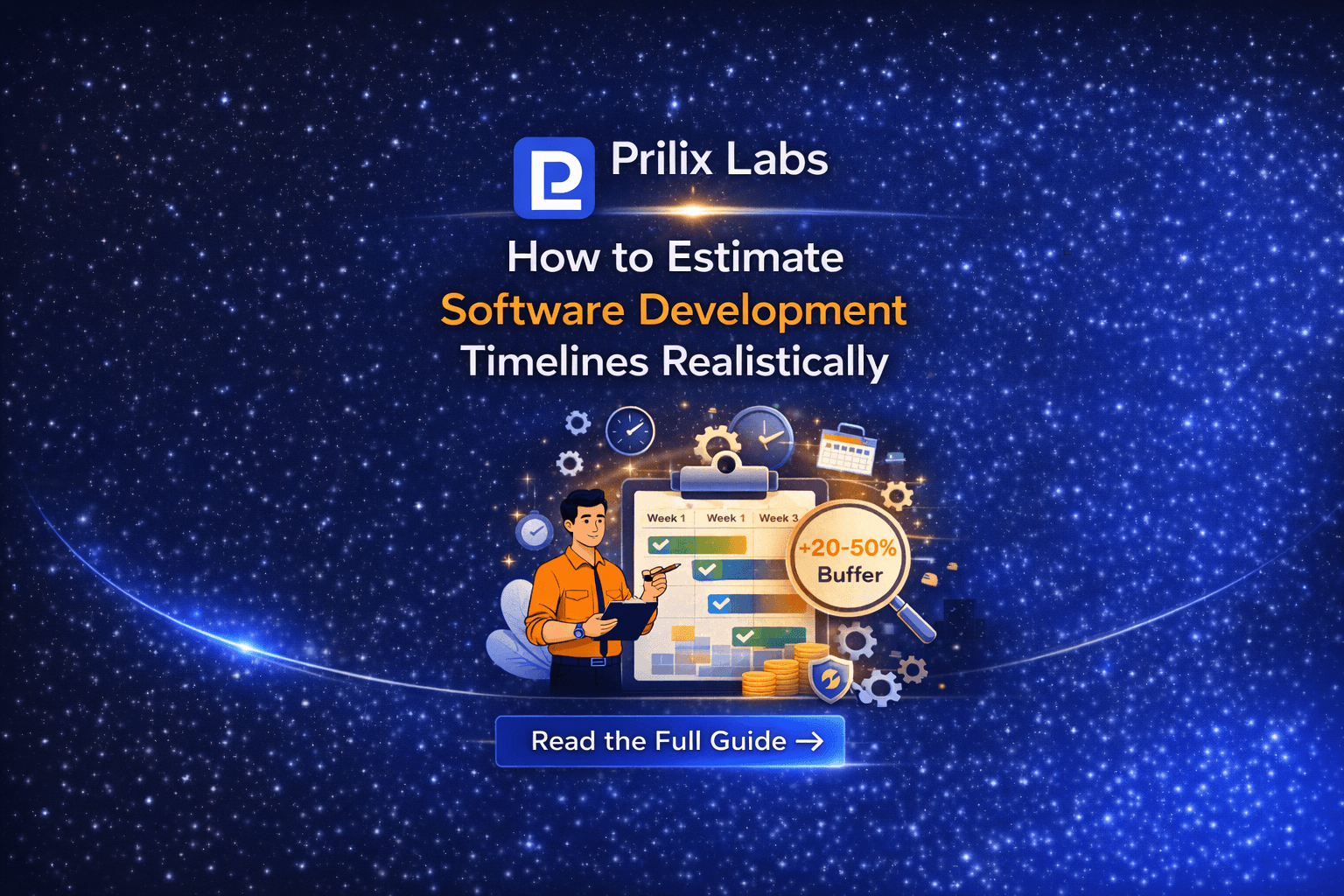
Key Takeaways
- 01
Realistic timeline estimation works better when you account for discovery, scope clarity, integration complexity, and review cycles.
- 02
Short answer: Add buffer for unknowns: 15-25% for well-defined scope, 30-50% for fuzzy scope.
- 03
Strong estimation decisions come from clear tradeoffs around scope, assumptions, and review cadence.
- 04
Shorter, clearer sections make the article easier to scan and easier for buyers to act on.
- 05
Common founder mistake: Accepting the shortest estimate without asking what is excluded or what assumptions were made.
- 06
The best next step is usually to document scope first, then ask for estimates with explicit assumptions.
How to Estimate Software Development Timelines Realistically matters because buyers do not reward software that is only technically correct. They reward software that solves a real workflow, looks credible, and is easy to evaluate. A founder-focused guide to setting realistic timelines.
If you are researching software development timelines, the useful questions are practical ones: what should be built first, what should be delayed, where does the budget really move, and which tradeoffs are worth making now. That is the frame this guide uses.
Quick answer
Realistic timeline estimation works best when you account for discovery, scope clarity, integration complexity, and review cycles.
- Add buffer for unknowns: 15-25% for well-defined scope, 30-50% for fuzzy scope.
- Break work into milestones with clear acceptance criteria.
- Review early and often to catch drift before it compounds.
Who this guide is for
This article is for founders and buyers who need to set or evaluate software development timelines.
It is written to help teams avoid the common mistake of optimistic estimates that slip.
- Useful when the backlog is larger than the budget.
- Useful when the founder needs to cut scope without losing the product thesis.
- Useful when the first release must support customer conversations, pilots, or revenue.
What drives timeline
The goal is not to create more theory. The goal is to show the factors that actually affect how long software takes to build.
| Factor | Low impact | High impact | Typical effect |
|---|---|---|---|
| Scope clarity | Well-defined workflows | Vague or evolving scope | +20-50% when fuzzy |
| Integrations | 1-2 simple APIs | Multiple sync points, legacy systems | +15-40% when complex |
| Review cadence | Weekly demos, fast feedback | Infrequent or delayed feedback | +10-30% when slow |
| Team size | Right-sized team | Too small or coordination overhead | Variable by project |
Realistic timeline ranges
The first release should prove something concrete: that a buyer will care, that a user will adopt the workflow, or that the product can replace a painful manual process. Without that frame, the build drifts into generic software effort.
Simple MVP (1-2 flows, minimal integrations)
Typically 4-8 weeks with one developer, 6-10 weeks with design support.
Standard MVP (3-5 flows, roles, billing)
Typically 8-14 weeks with a small team.
Complex MVP (multi-role, integrations, reporting)
Typically 12-20 weeks with a full team.
Common founder mistake
The common mistake is accepting the shortest estimate without asking what is excluded or what assumptions were made. Optimistic estimates often assume perfect scope clarity and no changes.
Founder note
When the workflow is genuinely custom or operationally messy, early software consulting input can help scope and estimate more accurately.
Estimation checklist
- Document scope and exclusions before asking for estimates.
- Ask what assumptions were used and what could extend the timeline.
- Add buffer for unknowns: 15-25% for well-defined, 30-50% for fuzzy.
- Plan for weekly reviews to catch drift early.
- Treat the first milestone as a calibration point for the rest.
What to do next
If you are importing these JSON files into MongoDB, this is the content shape you want: clean headings, clear box sections, visible lists, and one practical table.
Apply this in a real project
If you’re planning to build or improve software based on these ideas, our custom software development services can help you define scope, reduce delivery risk, and ship maintainable systems.
For founder-led execution, explore our product development services and web development services to turn requirements into a working release with clear ownership.
Expert Insights
Scope clarity drives accuracy
The more defined the scope, the more accurate the estimate. Vague scope leads to optimistic estimates that slip.
Buffer is not waste
Adding 15-25% buffer for well-defined scope and 30-50% for fuzzy scope is not pessimism; it is realism. Projects without buffer often slip and create more stress.
Review early, review often
Weekly demos and fast feedback catch drift before it compounds. Delayed review is one of the biggest drivers of timeline overruns.
Tags
Reader Rating
Based on 1 reviews
Frequently Asked Questions
How should founders estimate software development timelines?+
What usually causes timelines to slip?+
How much buffer should I add to estimates?+
When should I trust a short estimate?+
What is the typical timeline for an MVP?+
Reader Questions
How do I know if an estimate is realistic?
Compare to similar projects, ask what assumptions were used, and check if scope is well-defined. Estimates that assume no changes or perfect clarity are often optimistic.
What part of the project should I focus on to keep timelines on track?
Focus on scope clarity, fast feedback cycles, and catching drift early. Weekly demos and clear acceptance criteria help.
How much does team size affect timeline?
Right-sized teams deliver faster. Too small stretches timeline; too large adds coordination overhead. One strong developer can often outperform two junior developers.
Related Articles
Technology • 3 min
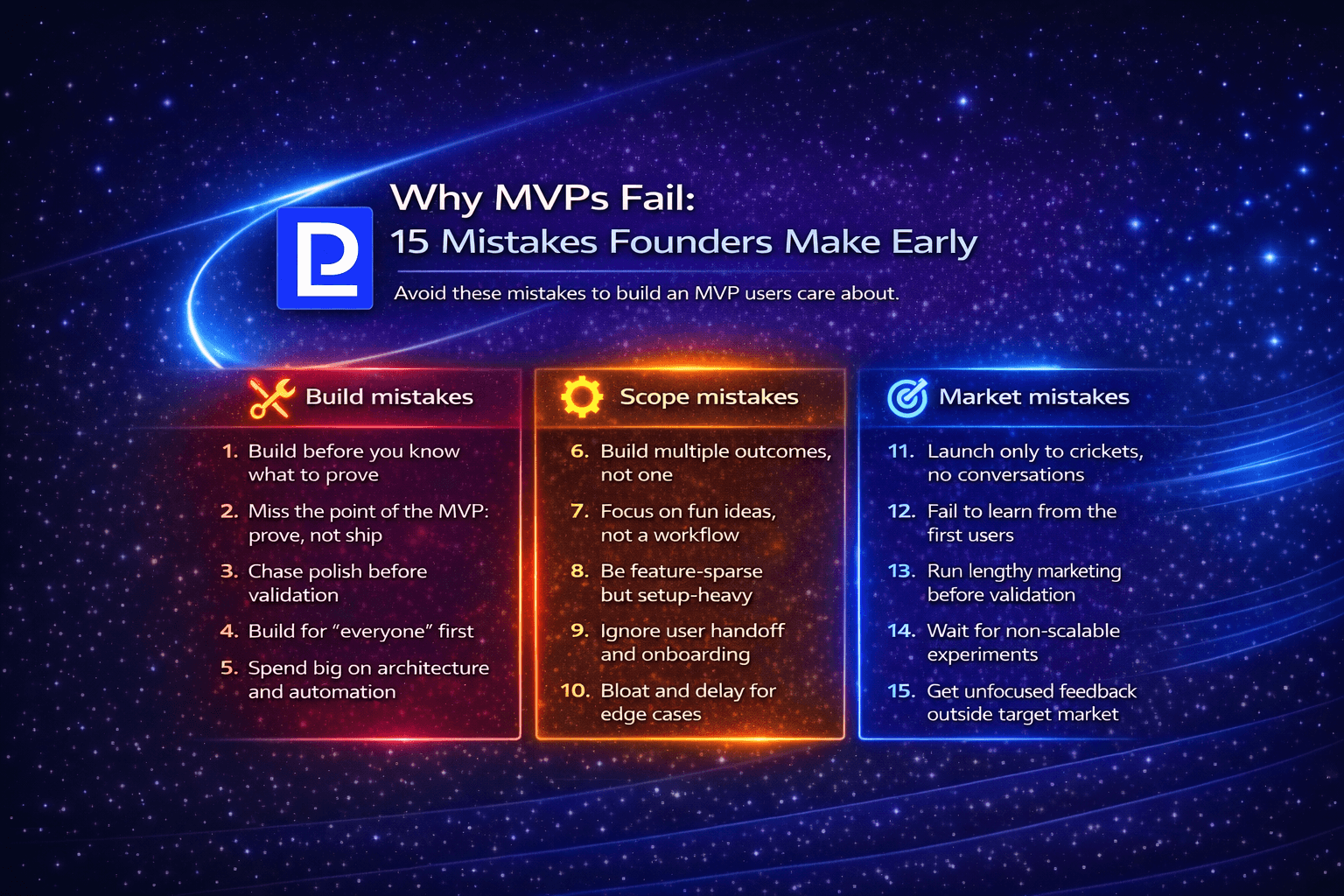
Why MVPs Fail: 15 Mistakes Founders Make Early
A founder-focused guide to the 15 most common MVP mistakes: what causes failure, how to avoid them, and how to build MVPs that actually validate.
Technology • 3 min
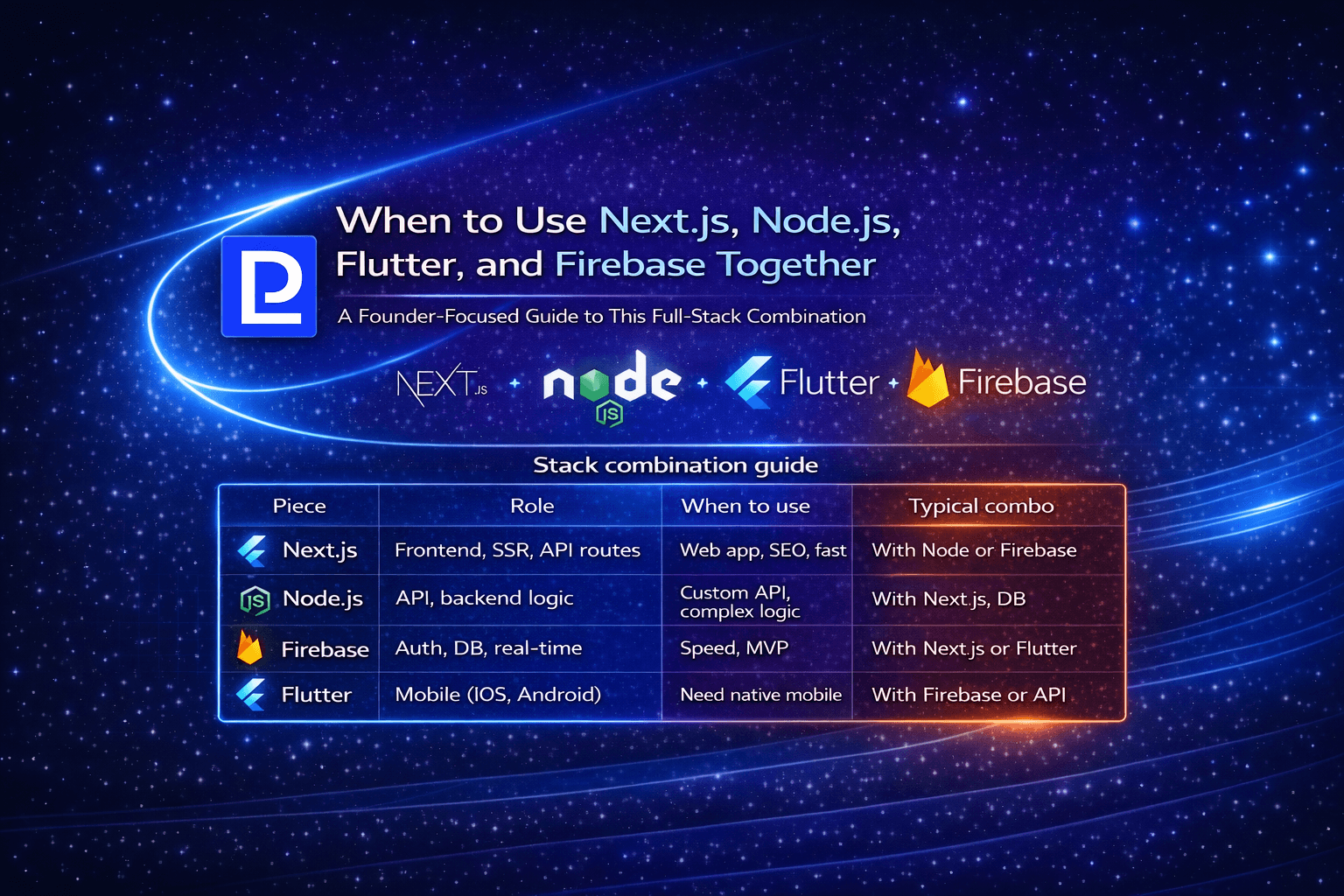
When to Use Next.js, Node.js, Flutter, and Firebase Together
A founder-focused guide to combining Next.js, Node.js, Flutter, and Firebase: when the stack makes sense and how to use them together.
Technology • 3 min
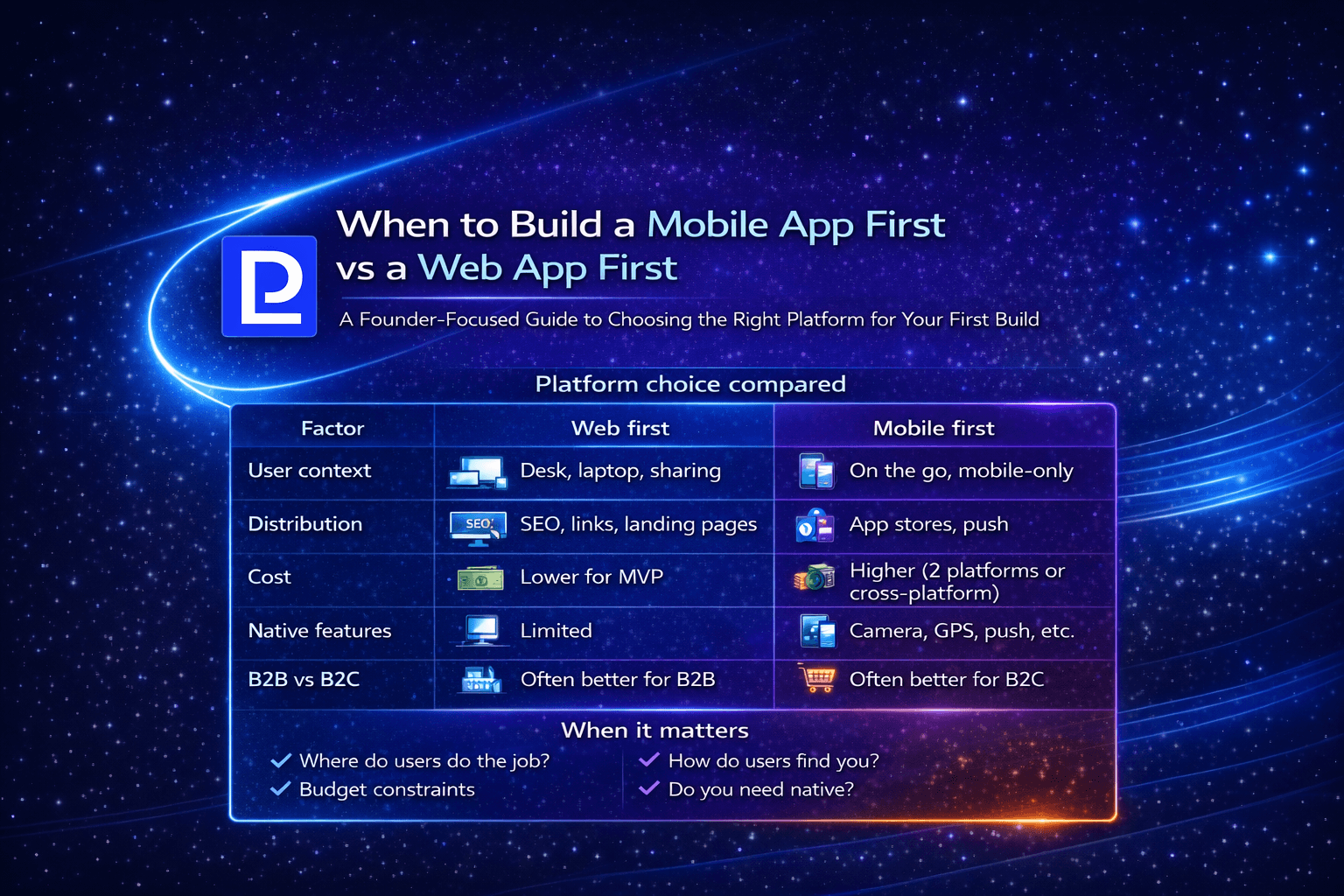
When to Build a Mobile App First vs a Web App First
A founder-focused guide to choosing mobile-first vs web-first: when each makes sense, tradeoffs, and how to decide for your product.