Software Development Retainers: When Ongoing Support Makes Sense
A founder-focused guide to software development retainers: when they make sense, how they work, and how to structure them.
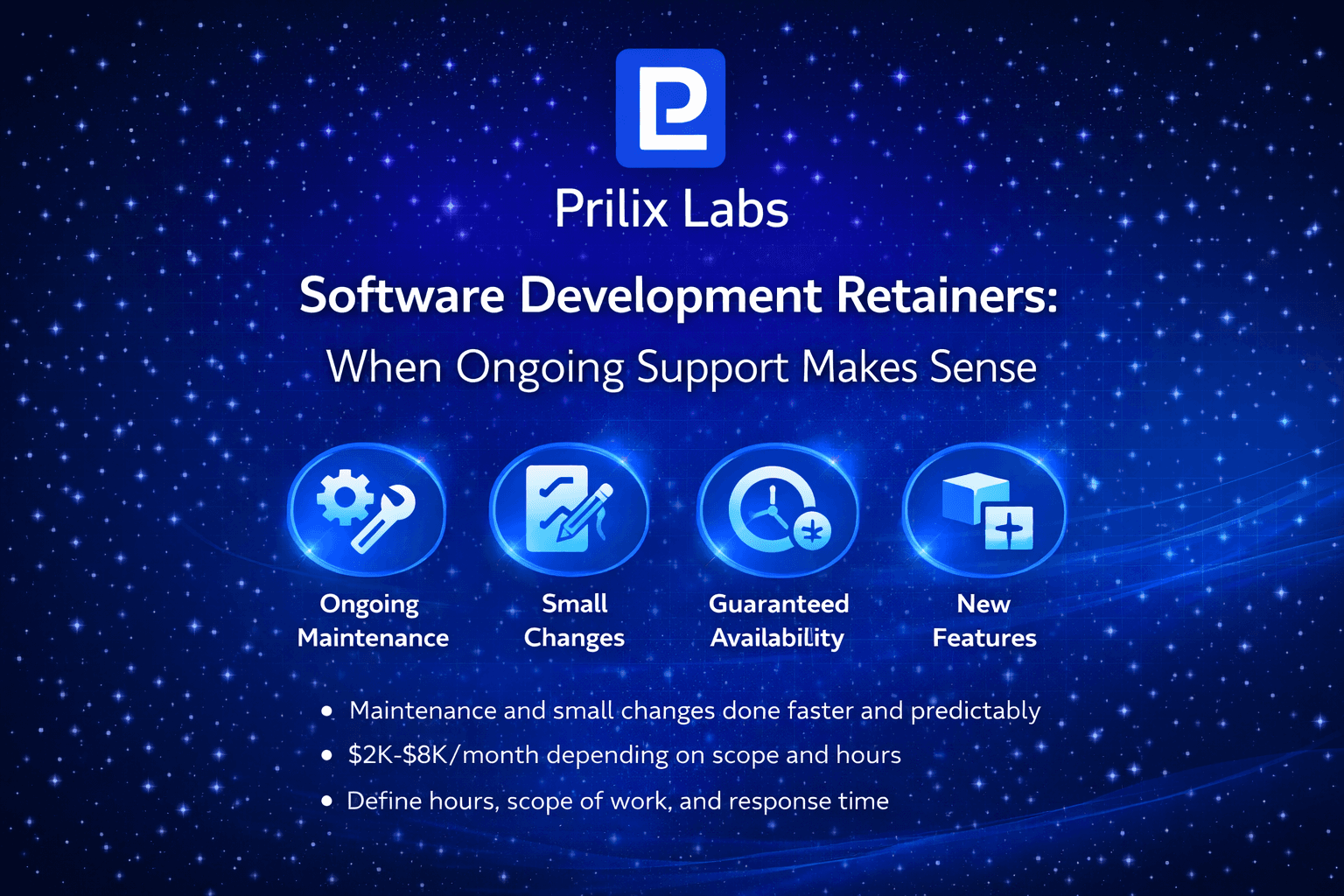
Key Takeaways
- 01
Retainers make sense when you have ongoing maintenance, small changes, or need guaranteed availability.
- 02
Short answer: Typical $2K-$8K/month. Structure: hours, scope, response time. Keep features separate.
- 03
Strong retainer structure comes from clear scope (maintenance, small changes) and exclusions (new features).
- 04
Shorter, clearer sections make the article easier to scan and easier for buyers to act on.
- 05
Common founder mistake: Using retainer for new features without scope control. Scope features separately.
- 06
The best next step is usually to define scope and exclusions before signing.
Software Development Retainers: When Ongoing Support Makes Sense matters because buyers do not reward software that is only technically correct. They reward software that solves a real workflow, looks credible, and is easy to evaluate. A founder-focused guide to when retainers make sense.
If you are researching software retainers, the useful questions are practical ones: what should be built first, what should be delayed, where does the budget really move, and which tradeoffs are worth making now. That is the frame this guide uses.
Quick answer
Retainers make sense when you have ongoing maintenance, small changes, or need guaranteed availability. Typically 15-25% of build cost annually. Structure: monthly hours, scope of work, response time.
- When: ongoing maintenance, small changes, need availability.
- Typical: $2K-$8K/month depending on scope.
- Structure: hours, scope, response time, exclusions.
Who this guide is for
This article is for founders and buyers considering software development retainers.
It is written to help teams decide when retainers make sense and how to structure them.
- Useful when the backlog is larger than the budget.
- Useful when the founder needs to cut scope without losing the product thesis.
- Useful when the first release must support customer conversations, pilots, or revenue.
When retainers make sense
The goal is not to create more theory. The goal is to show when retainers are the right model.
| Situation | Retainer makes sense? | Why | Typical scope |
|---|---|---|---|
| Ongoing maintenance | Yes | Predictable work, need availability | Bugs, security, updates |
| Small changes frequently | Yes | Retainer often cheaper than ad-hoc | Tweaks, config, support |
| Need guaranteed availability | Yes | Critical for production | Response time, SLA |
| Rare changes only | No | Ad-hoc may be cheaper | Pay per incident |
| New feature development | Maybe | Can be part of retainer or separate | Scope separately |
How to structure a retainer
The first release should prove something concrete: that a buyer will care, that a user will adopt the workflow, or that the product can replace a painful manual process. Without that frame, the build drifts into generic software effort.
Monthly hours
Typical: 10-40 hours/month. Enough for maintenance and small changes. New features often billed separately.
Scope of work
Define: bugs, security, dependency updates, small changes. Exclude: new features, major rewrites. Scope control.
Response time
Define: critical (24h), high (48h), normal (1 week). Align with business need.
Common founder mistake
The common mistake is using the retainer for new feature development without scope control. Retainers work best for maintenance and small changes. Scope features separately.
Founder note
Custom software development partners often offer retainer arrangements. Structure: hours, scope, response time. Keep features separate for scope control.
Retainer checklist
- Define scope: maintenance, small changes. Exclude new features.
- Set monthly hours. Typical: 10-40 depending on need.
- Define response time for critical vs normal.
- Clarify what is excluded. New features, major rewrites.
- Review quarterly. Adjust hours and scope as needed.
What to do next
If you are importing these JSON files into MongoDB, this is the content shape you want: clean headings, clear box sections, visible lists, and one practical table.
Apply this in a real project
If you’re planning to build or improve software based on these ideas, our custom software development services can help you define scope, reduce delivery risk, and ship maintainable systems.
For founder-led execution, explore our product development services and web development services to turn requirements into a working release with clear ownership.
Expert Insights
Scope control is key
Define what is in scope (maintenance, small changes) and what is excluded (new features, major rewrites). Retainers work best with clear boundaries.
Retainers often save money
For ongoing work, retainers often cost less per hour than ad-hoc and ensure availability. Predictable for both sides.
Features are different
New feature development is different from maintenance. Scope it separately. Do not let feature creep into the retainer without adjusting.
Tags
Reader Rating
Based on 1 reviews
Frequently Asked Questions
When do software development retainers make sense?+
How much do retainers typically cost?+
What should be included in a retainer?+
What should be excluded from a retainer?+
How do I structure a retainer?+
Reader Questions
How do I know if I need a retainer vs ad-hoc?
If you have ongoing maintenance, small changes frequently, or need guaranteed availability, a retainer makes sense. If changes are rare, ad-hoc may be cheaper.
What part of the retainer should I focus on as a founder?
Focus on scope and exclusions. What is in? What is out? Scope control prevents retainer creep.
How do I avoid retainer creep?
Define scope clearly. Exclude new features. When a request is out of scope, scope it separately. Use the retainer for maintenance and small changes only.
Related Articles
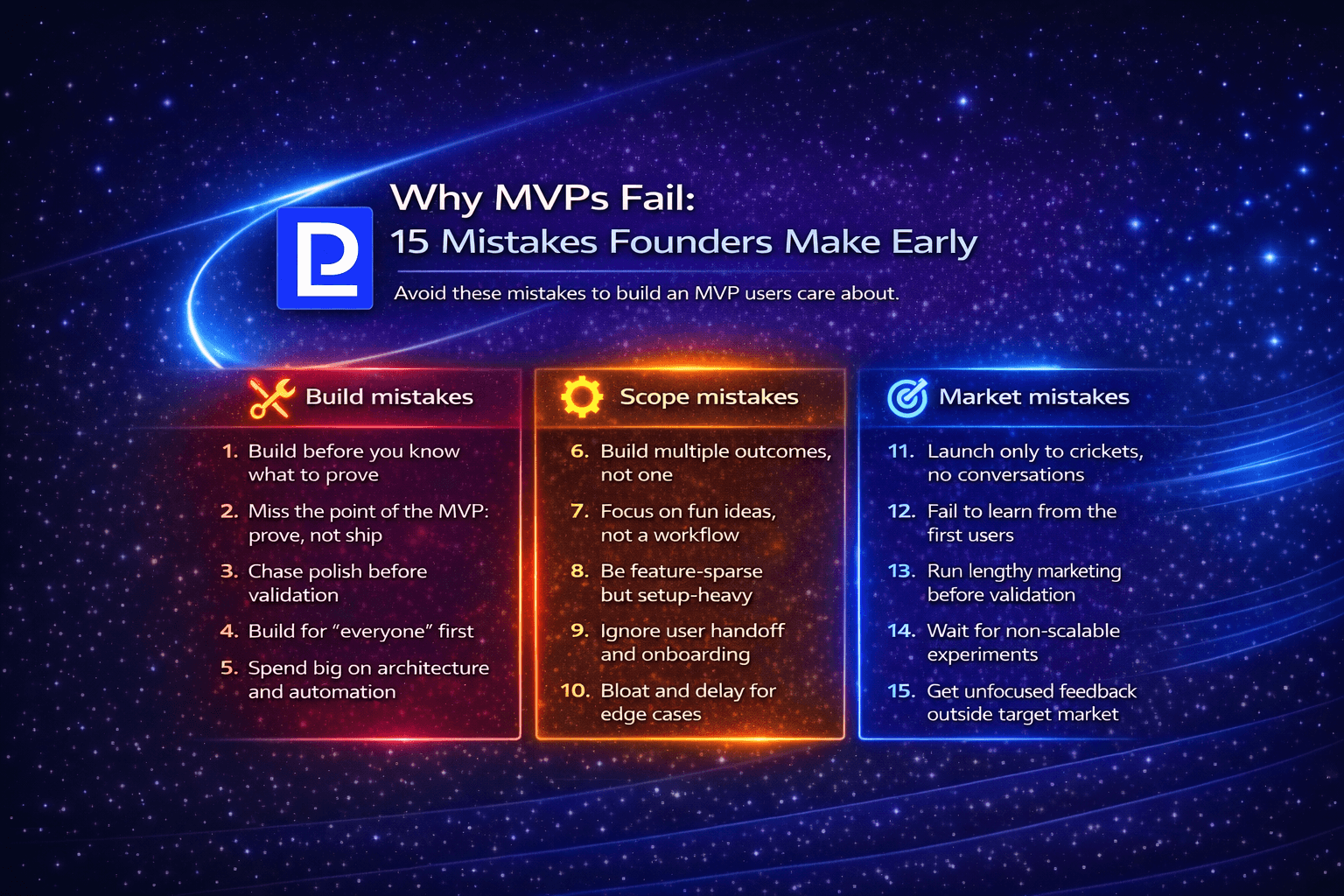
Technology • 3 min
Why MVPs Fail: 15 Mistakes Founders Make Early
A founder-focused guide to the 15 most common MVP mistakes: what causes failure, how to avoid them, and how to build MVPs that actually validate.
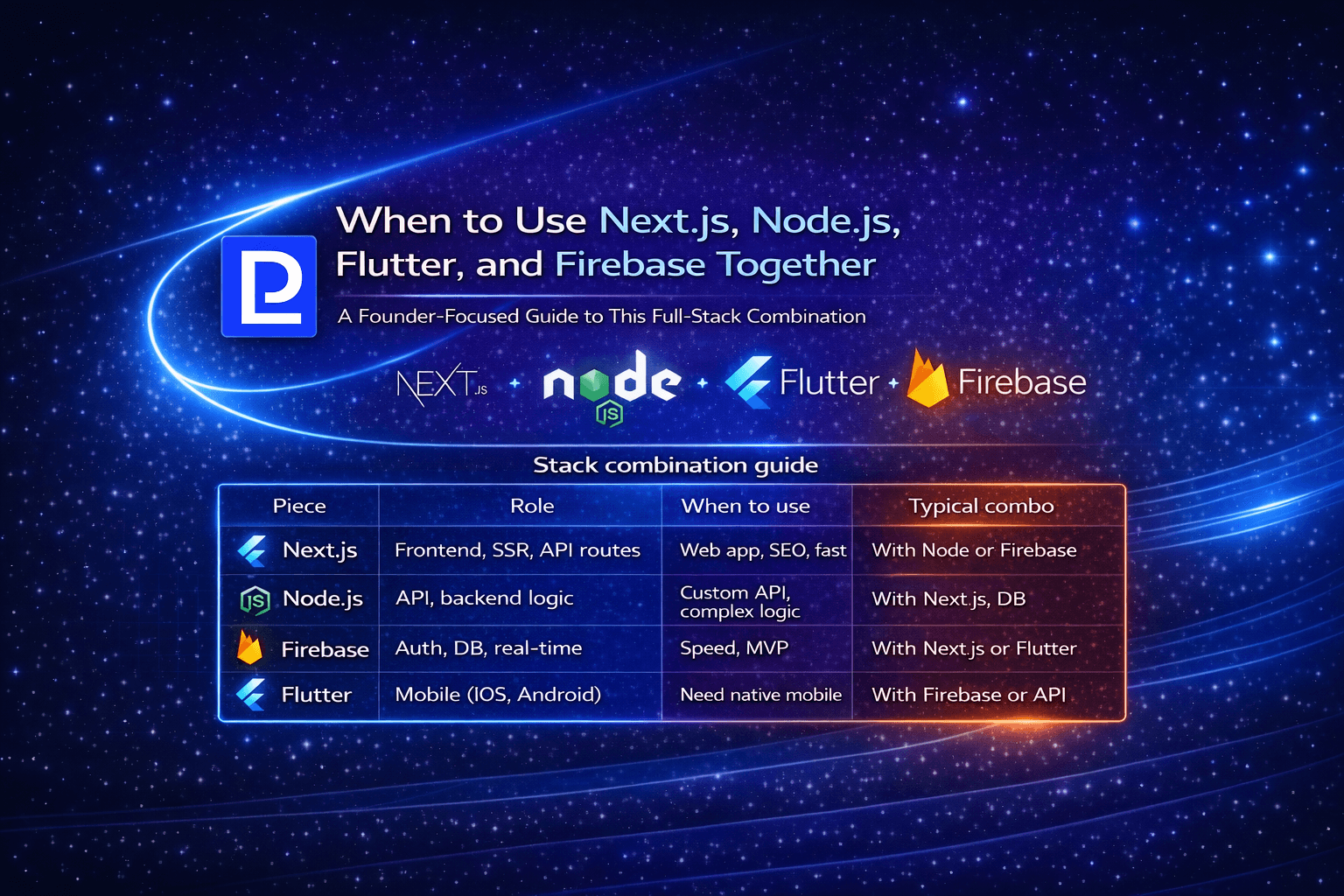
Technology • 3 min
When to Use Next.js, Node.js, Flutter, and Firebase Together
A founder-focused guide to combining Next.js, Node.js, Flutter, and Firebase: when the stack makes sense and how to use them together.
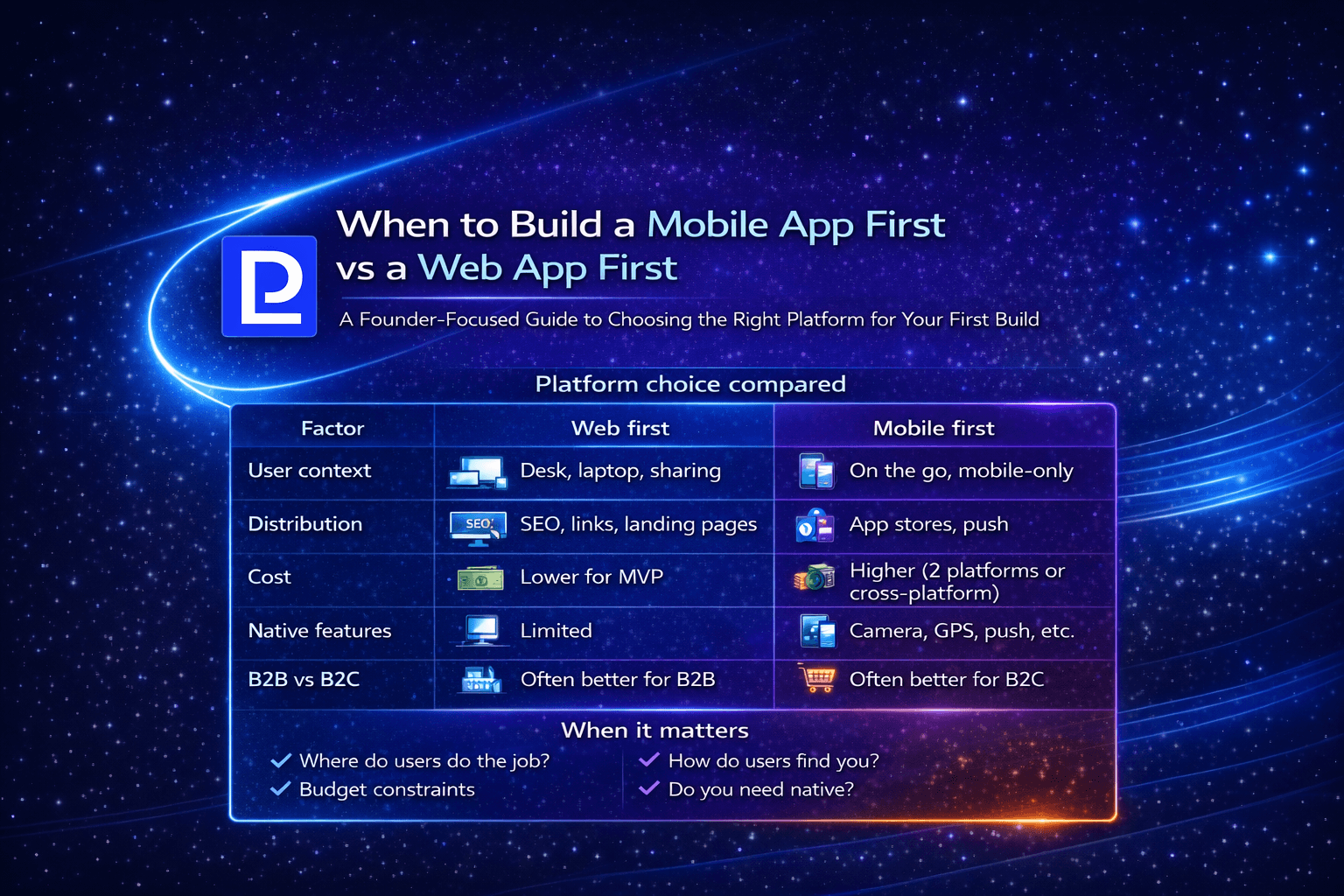
Technology • 3 min
When to Build a Mobile App First vs a Web App First
A founder-focused guide to choosing mobile-first vs web-first: when each makes sense, tradeoffs, and how to decide for your product.