Founder Checklist: 15 Questions Before Hiring a Development Partner
A practical list of 15 questions founders should ask before hiring a development partner, with guidance on what strong and weak answers sound like.
Key Takeaways
- 01
Ownership and communication quality usually matter more than the cheapest rate.
- 02
Strong partners reduce risk by making scope, QA, and milestones visible.
- 03
A team that challenges vague requirements is often safer than a team that agrees too quickly.
- 04
Documentation, repo access, and handover terms should be clear before work starts.
- 05
The best partner fit depends on how much internal product leadership you already have.
Founder Checklist: 15 Questions Before Hiring a Development Partner matters because buyers and founders need a clear answer, not a vague range or a stack of agency buzzwords. This guide explains questions before hiring a development partner in a commercially realistic way so you can make better product, budget, and delivery decisions.
The short version: the best partner is not the one that says yes to every feature request. It is the one that can explain scope, challenge risky assumptions, and show how delivery will stay visible from week one.
Quick answer
questions before hiring a development partner should be evaluated through scope, delivery risk, and business usefulness, not just a headline number or trend-driven opinion.
- Evaluate ownership, communication rhythm, QA, and handover clarity before price alone.
- Healthy teams explain tradeoffs and delivery risk in plain language.
- You should see how decisions are tracked and how progress becomes visible.
Who this guide is for
This guide is for founders and non-technical buyers who need outside delivery help but do not want to lose control of quality, timelines, or technical ownership.
How to reduce delivery risk early
Founders should treat partner selection as a risk-control decision. Ask how the team handles ambiguity, reviews working software, documents decisions, and escalates blockers. Those answers matter more than polished sales decks.
A reliable team will usually narrow scope before expanding it. That is not a lack of ambition. It is how experienced teams protect momentum.
| Question theme | Strong answer sounds like | Weak answer sounds like |
|---|---|---|
| Scope | Specific assumptions and exclusions | We will figure it out later |
| Quality | Named QA steps and release checks | We test as we go |
| Ownership | Clear lead and escalation path | The whole team owns it |
| Handover | Repo access and documentation plan | Not discussed yet |
Choosing a development partner is one of the highest-stakes decisions a founder makes. The right team ships on time and builds maintainable code. The wrong one creates technical debt, delays, and costly rewrites.
This checklist helps you evaluate partners systematically—before you sign.
Ownership & Handover
1. Who owns the code and repository?
You should have full access to the repo from day one. If the partner "owns" the code until final payment, that's a red flag.
2. What documentation do you provide at handover?
Look for: architecture docs, API documentation, deployment runbooks, and environment setup guides. Vague answers suggest weak processes.
3. Can we bring the project in-house or switch vendors later?
There should be no lock-in. Code, credentials, and knowledge should transfer cleanly.
Quality & Process
4. What is your definition of "done" for a feature?
Good teams define: code complete, tested, reviewed, documented. Avoid teams that equate "done" with "it works on my machine."
5. How do you handle QA and testing?
Expect: unit tests, integration tests, manual QA before demos. No formal QA process is a risk.
6. What happens when requirements change mid-sprint?
Agile teams expect change. Ask how they handle scope adjustments without blowing the timeline.
Communication & Governance
7. How often do we get updates?
Weekly demos or written updates are standard. Bi-weekly or monthly with no structure is a warning sign.
8. Who is our main point of contact?
You need a single accountable person—not a rotating cast of developers.
9. How do you escalate issues?
Clear escalation paths prevent problems from festering. Ask for a concrete example.
Technical & Scalability
10. How do you plan for scalability?
They should discuss database design, caching, and architecture choices—not just features.
11. What is your approach to security?
Authentication, authorization, data encryption, and dependency updates should be part of the process.
12. Have you built similar products before?
Ask for 2–3 references or case studies. Generic "we do everything" answers are weak.
Pricing & Engagement
13. What is included in your pricing?
Clarify: support, bug fixes, deployment, documentation. Avoid surprise add-ons.
14. What is your payment structure?
Milestone-based payments align incentives. Large upfront payments increase risk.
15. Do you offer post-launch support?
Products need maintenance. Ensure you have a path for ongoing support and iterations.
Decision Framework
Score each answer 1–5. Partners scoring below 60/75 on this checklist carry higher delivery risk. Prioritize ownership, quality, and communication over price alone.
Conclusion
Use this checklist in discovery calls. The best partners answer these questions confidently and back them up with process documentation.
Choose this type of partner if...
Choose a full delivery partner when you need product thinking, technical leadership, QA, and predictable milestones. Choose dedicated developers only when you already have strong internal product leadership and a steady backlog.
Common hiring mistake
The most expensive mistake is choosing a team because they are agreeable and affordable while never verifying how they manage scope, quality, and accountability. Founders pay for that later in delays and technical debt.
Partner evaluation checklist
- Ask who owns architecture, QA, delivery, and releases.
- Review how often you will see working software.
- Confirm repo access, documentation, and handover terms.
- Look for thoughtful pushback on risky scope.
- Compare communication quality, not just hourly rates.
If you are comparing delivery options, also read build vs buy vs partner, how dedicated developers differ from a full partner, and our software consulting support.
What to do next
Shortlist partners based on ownership, communication, and quality controls before you compare numbers. A slightly more expensive team with clear governance is usually cheaper than a vague team that needs rescuing later. If you want a structured starting point, explore our custom software development services, software consulting support, or contact our team.
Apply this in a real project
If you’re planning to build or improve software based on these ideas, our custom software development services can help you define scope, reduce delivery risk, and ship maintainable systems.
For founder-led execution, explore our product development services and software consulting services to turn requirements into a working release with clear ownership.
Expert Insights
A reliable process is a commercial asset
Structured demos, written updates, and clear ownership are not administrative overhead. They are how buyers stay aligned and reduce expensive surprises.
The right pushback is a positive signal
A strong partner protects the product by challenging fuzzy requirements, unclear success criteria, and risky timing assumptions.
Tags
Reader Rating
Based on 1 reviews
Frequently Asked Questions
What should founders ask a development partner first?+
Is a cheaper team always riskier?+
What signals a strong delivery process?+
Should founders choose specialists or a full-service partner?+
What should happen after launch?+
Reader Questions
How involved do I need to be as a founder?
You do not need to micromanage delivery, but you do need to stay close to scope priorities, decisions, and business context.
What if I do not understand the technical details?
A good partner should still be able to explain risks, tradeoffs, and options in business terms you can act on.
Can I start small before committing fully?
Yes. Many teams start with a discovery or scoped first milestone before expanding into a larger engagement.
Related Articles
Technology • 3 min
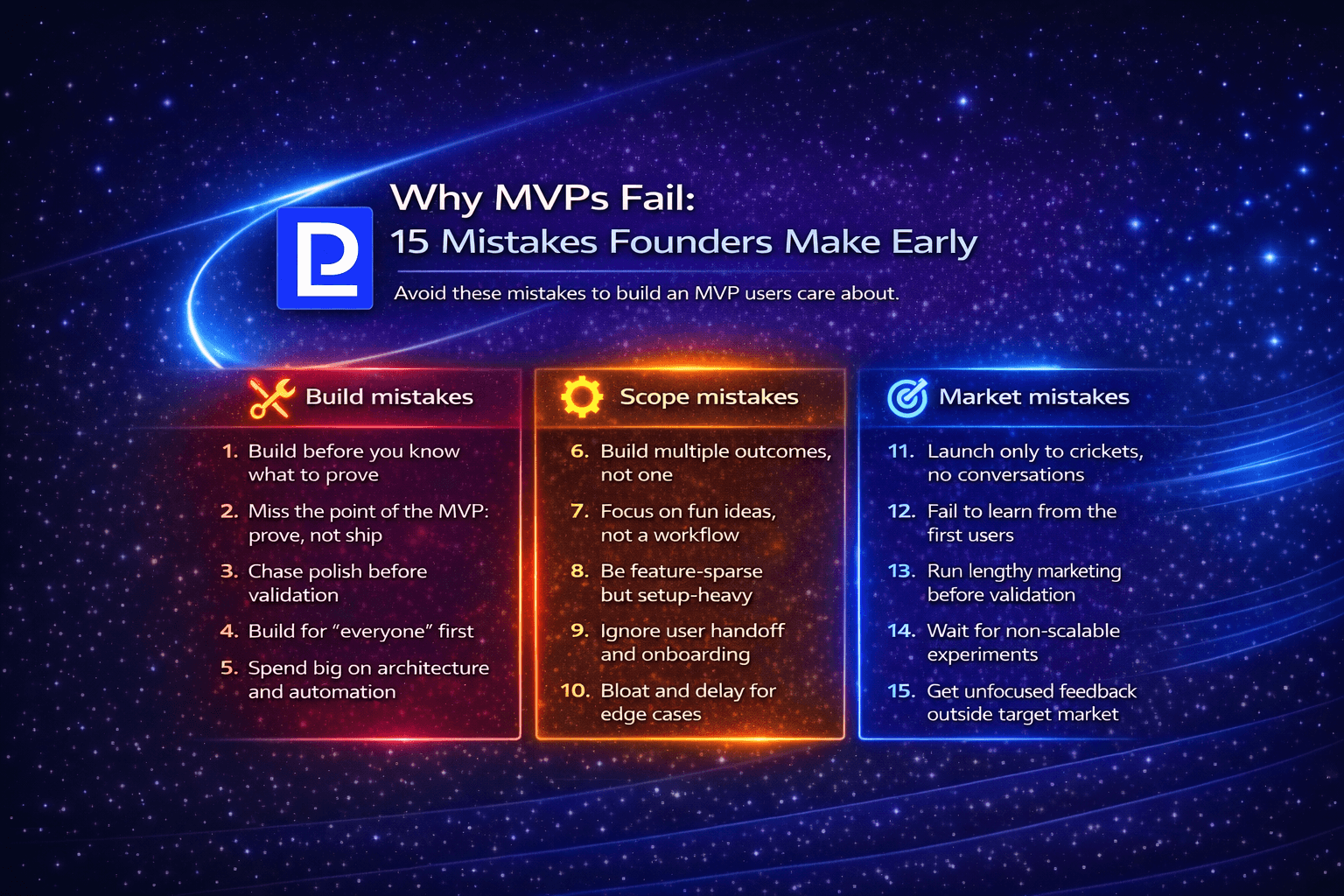
Why MVPs Fail: 15 Mistakes Founders Make Early
A founder-focused guide to the 15 most common MVP mistakes: what causes failure, how to avoid them, and how to build MVPs that actually validate.
Technology • 3 min
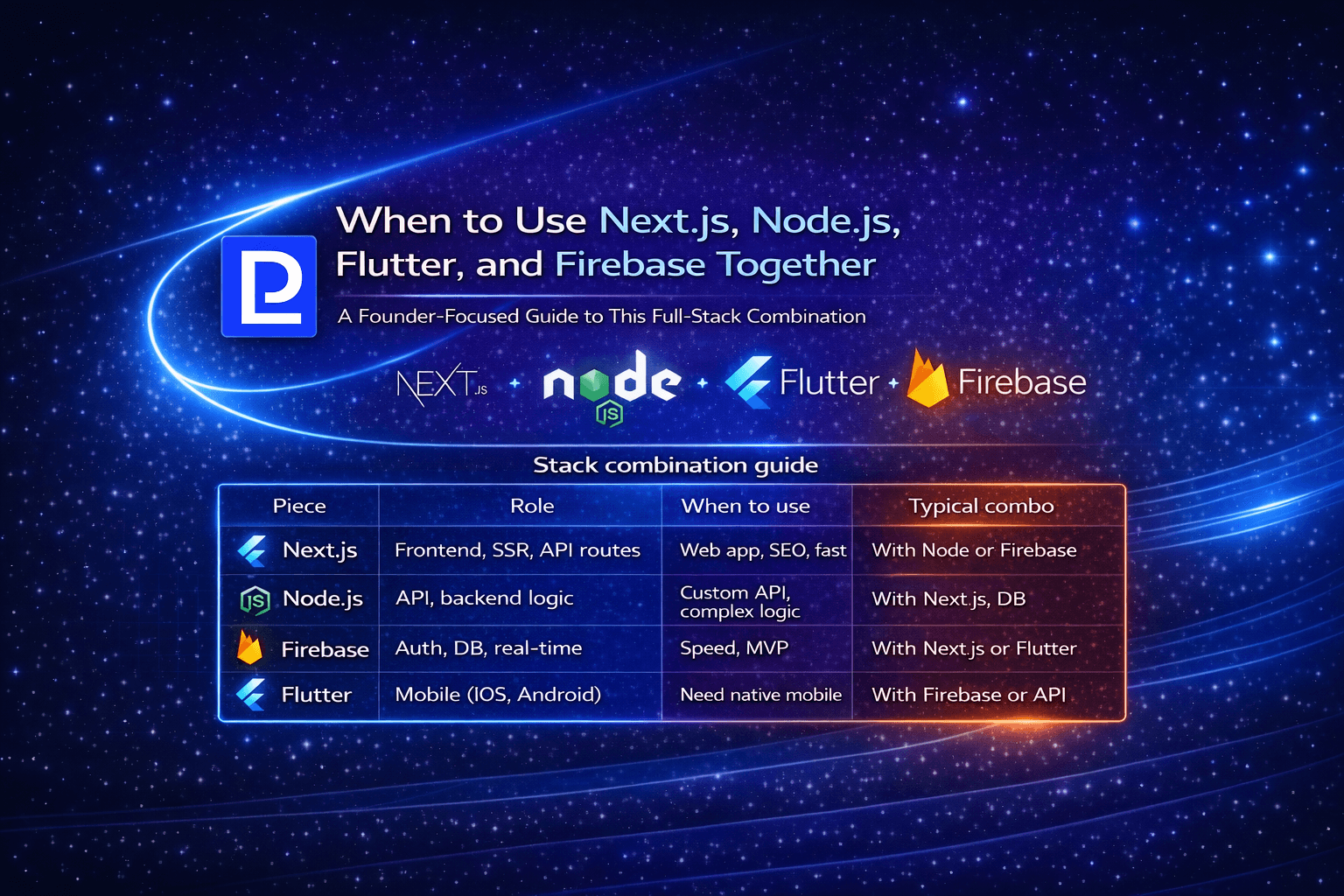
When to Use Next.js, Node.js, Flutter, and Firebase Together
A founder-focused guide to combining Next.js, Node.js, Flutter, and Firebase: when the stack makes sense and how to use them together.
Technology • 3 min
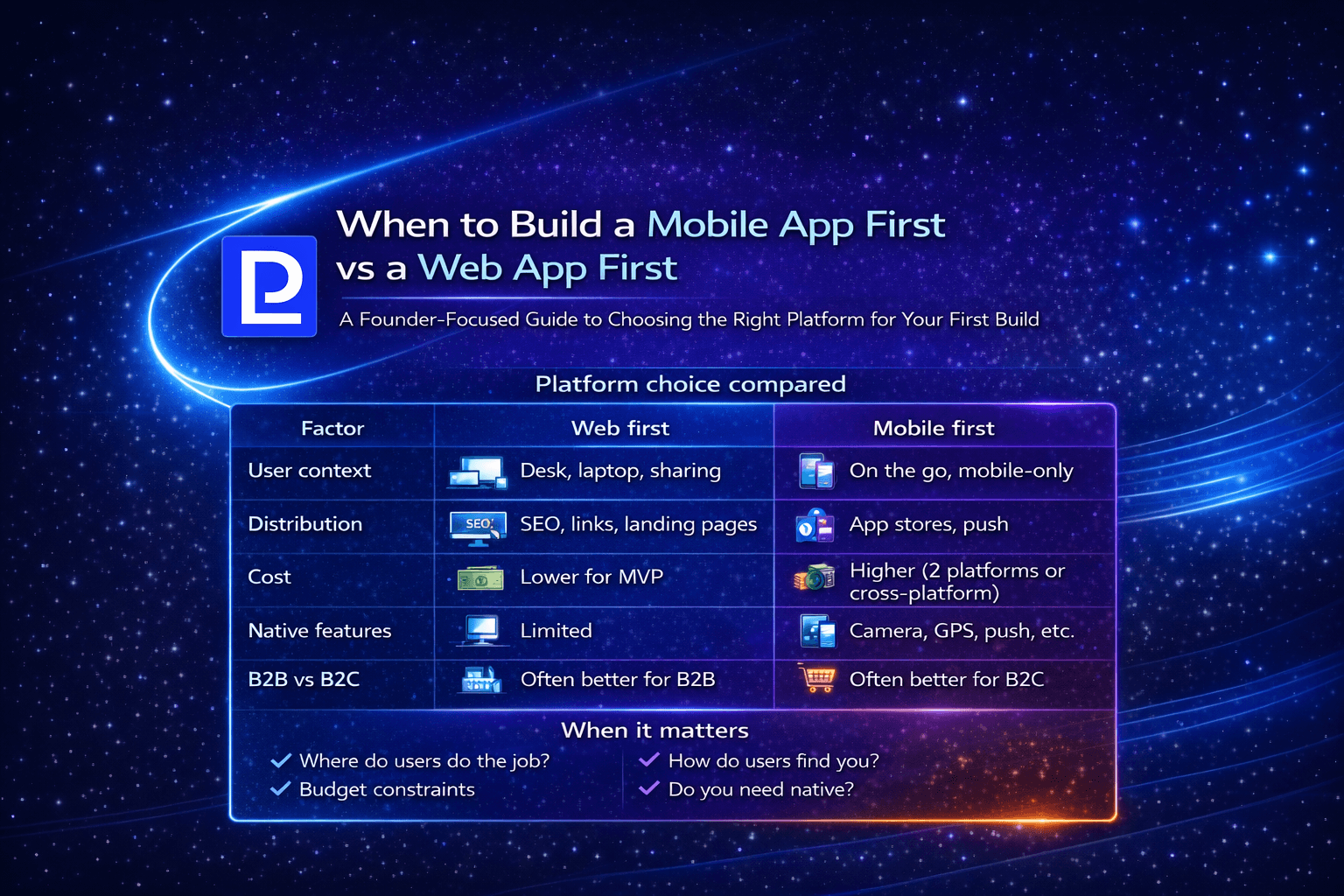
When to Build a Mobile App First vs a Web App First
A founder-focused guide to choosing mobile-first vs web-first: when each makes sense, tradeoffs, and how to decide for your product.