Hire Dedicated Software Developers: Everything You Need to Know
A no-fluff guide to hiring dedicated software developers, including when the model makes sense, what good delivery looks like, and how to avoid expensive mismatches.

Key Takeaways
- 01
Ownership and communication quality usually matter more than the cheapest rate.
- 02
Strong partners reduce risk by making scope, QA, and milestones visible.
- 03
A team that challenges vague requirements is often safer than a team that agrees too quickly.
- 04
Documentation, repo access, and handover terms should be clear before work starts.
- 05
The best partner fit depends on how much internal product leadership you already have.
Hire Dedicated Software Developers: Everything You Need to Know matters because buyers and founders need a clear answer, not a vague range or a stack of agency buzzwords. This guide explains hire dedicated software developers in a commercially realistic way so you can make better product, budget, and delivery decisions.
The short version: the best partner is not the one that says yes to every feature request. It is the one that can explain scope, challenge risky assumptions, and show how delivery will stay visible from week one.
Quick answer
hire dedicated software developers should be evaluated through scope, delivery risk, and business usefulness, not just a headline number or trend-driven opinion.
- Evaluate ownership, communication rhythm, QA, and handover clarity before price alone.
- Healthy teams explain tradeoffs and delivery risk in plain language.
- You should see how decisions are tracked and how progress becomes visible.
Who this guide is for
This guide is for founders and non-technical buyers who need outside delivery help but do not want to lose control of quality, timelines, or technical ownership.
How to reduce delivery risk early
Founders should treat partner selection as a risk-control decision. Ask how the team handles ambiguity, reviews working software, documents decisions, and escalates blockers. Those answers matter more than polished sales decks.
A reliable team will usually narrow scope before expanding it. That is not a lack of ambition. It is how experienced teams protect momentum.
| Need | Dedicated developers fit well | Better alternative |
|---|---|---|
| Longer roadmap | Yes, if work is steady and managed | Project team for short bursts |
| Strong product leadership | Yes, your PM or founder can direct them | Full service partner if leadership is thin |
| Undefined scope | Not ideal | Discovery or consulting first |
Modern businesses rely heavily on technology to build products, automate operations, and deliver digital services. However, hiring and maintaining an in-house engineering team can be expensive and time-consuming. This is why many companies choose to hire dedicated software developers.
Dedicated developers work exclusively on a client's project, acting as an extension of the internal team. They help businesses scale development capacity without going through the long recruitment process.
This guide explains how hiring dedicated developers works, the benefits of this model, costs involved, and how businesses can choose the right development partner.
What Does It Mean to Hire Dedicated Software Developers?
When businesses hire dedicated software developers, they get a team or individual engineers who focus only on their project. These developers usually work remotely but integrate into the company's development workflow.
They collaborate with internal teams, attend meetings, work on product development, and contribute to the long-term technical roadmap.
Unlike freelancers or short-term contractors, dedicated developers are involved in the product throughout its lifecycle.
Why Companies Hire Dedicated Software Developers
Many businesses choose this model because it offers flexibility and scalability. Hiring dedicated developers allows companies to quickly increase their engineering capacity without long recruitment cycles.
Some key reasons businesses choose this model include:
- Faster development cycles
- Lower operational costs
- Access to specialized technical skills
- Scalable team structure
- Reduced hiring overhead
This approach is especially useful for startups and growing companies that need development resources quickly.
How the Dedicated Developer Model Works
The dedicated developer model usually involves a software development company providing engineers who work full-time on the client’s project.
The process generally includes the following steps:
Project Requirements and Planning
The business defines project requirements, technology stack, and expected deliverables.
Developer Selection
The development partner provides engineers whose skills match the project needs.
Team Integration
The developers join the client’s workflow, tools, and communication channels.
Development and Delivery
The dedicated team works continuously on product development and improvements.
This model ensures consistency, productivity, and long-term collaboration.
Benefits of Hiring Dedicated Software Developers
Scalability
Businesses can quickly scale development teams up or down depending on project requirements.
Cost Efficiency
Hiring dedicated developers often costs less than maintaining a full in-house engineering team.
Access to Global Talent
Companies can work with highly skilled engineers from different parts of the world.
Faster Product Development
With a focused team working on the project, development cycles become faster and more efficient.
Reduced Recruitment Effort
The development partner handles recruitment, onboarding, and administrative processes.
Cost of Hiring Dedicated Software Developers
The cost of hiring dedicated developers depends on location, experience level, and technology stack.
Typical pricing ranges include:
- Junior Developers: $20 – $40 per hour
- Mid-Level Developers: $40 – $80 per hour
- Senior Developers: $80 – $150 per hour
Some companies also offer monthly pricing models for dedicated teams.
When Should You Hire Dedicated Developers?
This model is ideal when businesses need consistent development support over a longer period.
Companies usually hire dedicated developers when:
- Building a startup product
- Scaling an existing software platform
- Launching a SaaS product
- Developing enterprise systems
- Modernizing legacy applications
Dedicated developers help maintain development momentum without interruptions.
Common Mistakes Businesses Make
While hiring dedicated developers offers many advantages, businesses should avoid common mistakes such as:
- Hiring developers without proper technical evaluation
- Unclear project requirements
- Poor communication processes
- Lack of project management structure
Clear planning and strong collaboration help maximize the benefits of this model.
How to Choose the Right Development Partner
When hiring dedicated developers, businesses should carefully evaluate development partners.
Look for companies that offer:
- Proven development experience
- Transparent communication
- Strong technical leadership
- Scalable team structure
- Post-launch support
A reliable development partner helps businesses build stable and scalable products.
Conclusion
Hiring dedicated software developers is one of the most effective ways for businesses to accelerate product development while controlling costs. This model provides flexibility, scalability, and access to skilled engineers.
By choosing the right development partner and maintaining strong communication, companies can build high-quality software products and scale their technology teams efficiently.
Choose this type of partner if...
Choose a full delivery partner when you need product thinking, technical leadership, QA, and predictable milestones. Choose dedicated developers only when you already have strong internal product leadership and a steady backlog.
Common hiring mistake
The most expensive mistake is choosing a team because they are agreeable and affordable while never verifying how they manage scope, quality, and accountability. Founders pay for that later in delays and technical debt.
Partner evaluation checklist
- Ask who owns architecture, QA, delivery, and releases.
- Review how often you will see working software.
- Confirm repo access, documentation, and handover terms.
- Look for thoughtful pushback on risky scope.
- Compare communication quality, not just hourly rates.
If you are comparing delivery options, also read build vs buy vs partner, how dedicated developers differ from a full partner, and our software consulting support.
What to do next
Shortlist partners based on ownership, communication, and quality controls before you compare numbers. A slightly more expensive team with clear governance is usually cheaper than a vague team that needs rescuing later. If you want a structured starting point, explore our custom software development services, software consulting support, or contact our team.
Apply this in a real project
If you’re planning to build or improve software based on these ideas, our custom software development services can help you define scope, reduce delivery risk, and ship maintainable systems.
For founder-led execution, explore our product development services and software consulting services to turn requirements into a working release with clear ownership.
Expert Insights
A reliable process is a commercial asset
Structured demos, written updates, and clear ownership are not administrative overhead. They are how buyers stay aligned and reduce expensive surprises.
The right pushback is a positive signal
A strong partner protects the product by challenging fuzzy requirements, unclear success criteria, and risky timing assumptions.
Tags
Frequently Asked Questions
What should founders ask a development partner first?+
Is a cheaper team always riskier?+
What signals a strong delivery process?+
Should founders choose specialists or a full-service partner?+
What should happen after launch?+
Reader Questions
How involved do I need to be as a founder?
You do not need to micromanage delivery, but you do need to stay close to scope priorities, decisions, and business context.
What if I do not understand the technical details?
A good partner should still be able to explain risks, tradeoffs, and options in business terms you can act on.
Can I start small before committing fully?
Yes. Many teams start with a discovery or scoped first milestone before expanding into a larger engagement.
Related Articles
Technology • 3 min
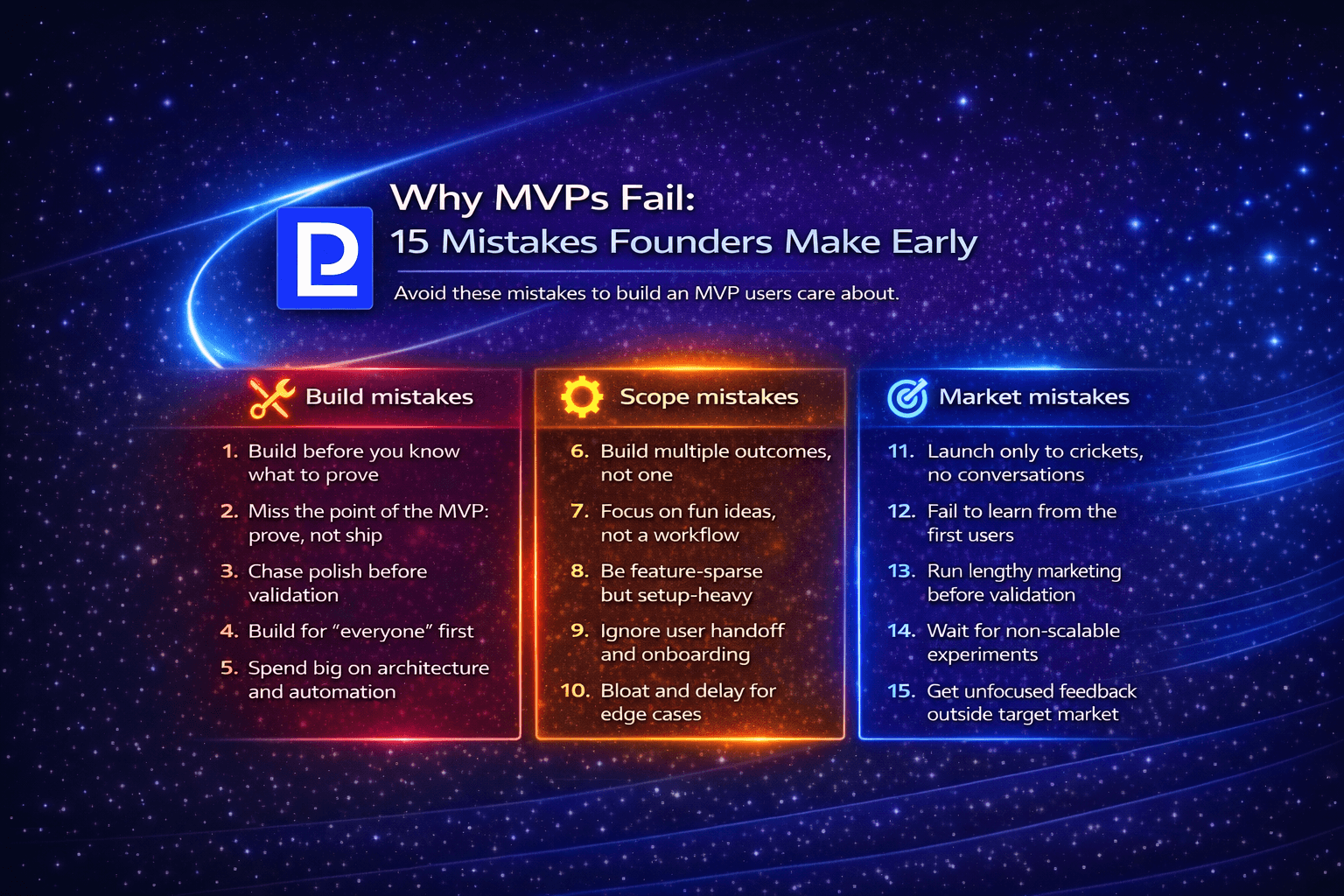
Why MVPs Fail: 15 Mistakes Founders Make Early
A founder-focused guide to the 15 most common MVP mistakes: what causes failure, how to avoid them, and how to build MVPs that actually validate.
Technology • 3 min
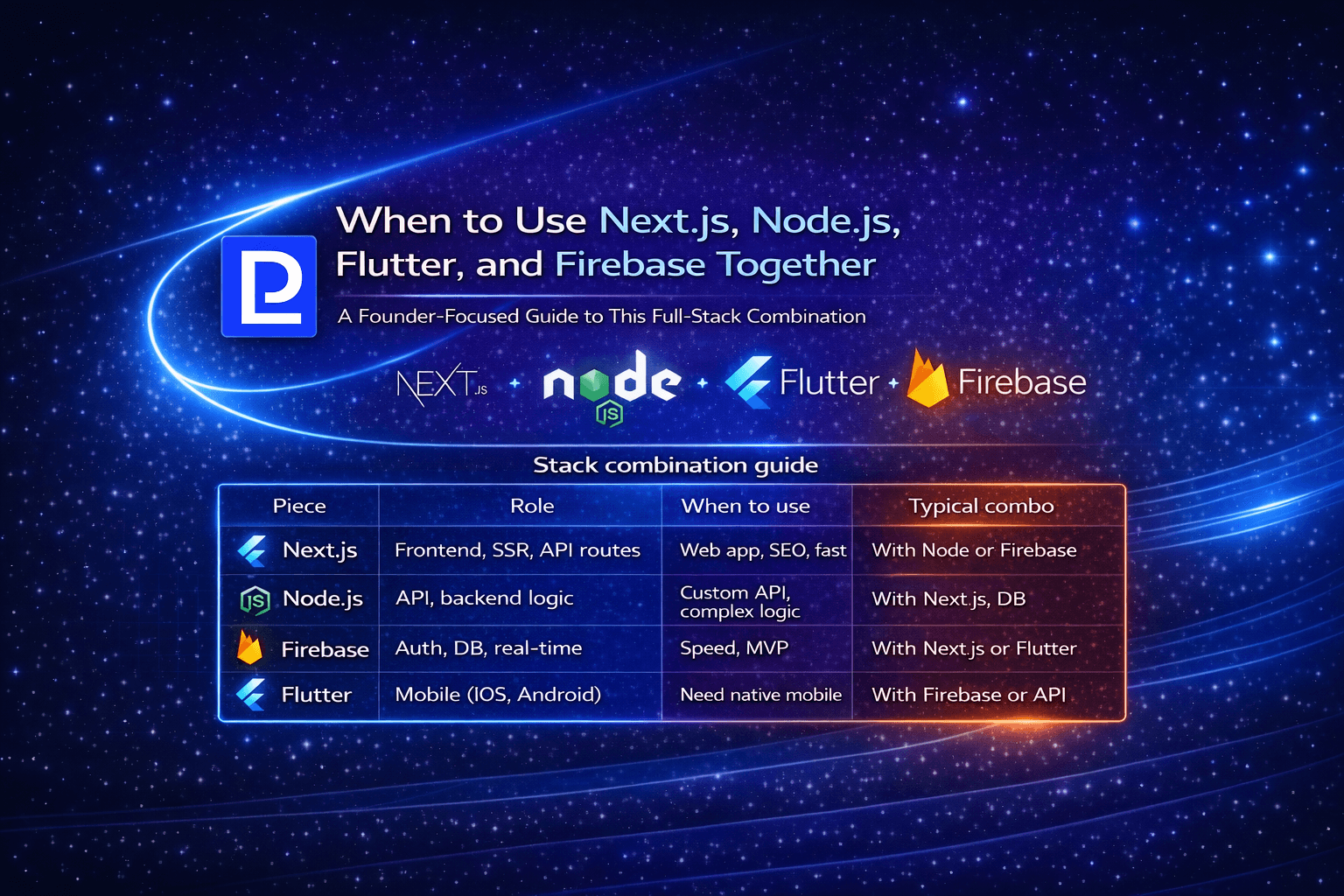
When to Use Next.js, Node.js, Flutter, and Firebase Together
A founder-focused guide to combining Next.js, Node.js, Flutter, and Firebase: when the stack makes sense and how to use them together.
Technology • 3 min
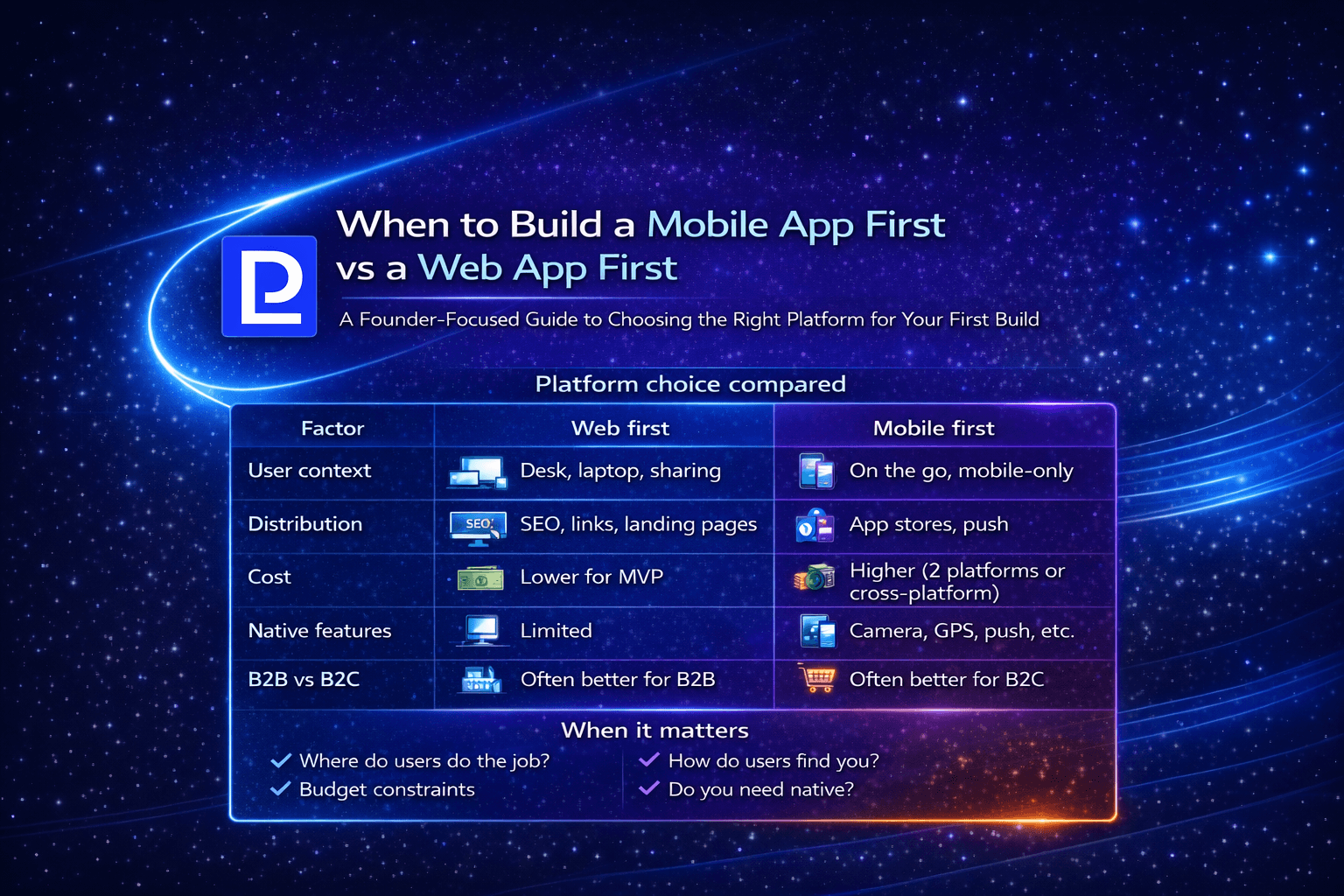
When to Build a Mobile App First vs a Web App First
A founder-focused guide to choosing mobile-first vs web-first: when each makes sense, tradeoffs, and how to decide for your product.