How to Choose a Software Development Company in 2026
This guide shows founders and buyers how to choose a software development company using the signals that actually affect delivery quality and cost.

Key Takeaways
- 01
Ownership and communication quality usually matter more than the cheapest rate.
- 02
Strong partners reduce risk by making scope, QA, and milestones visible.
- 03
A team that challenges vague requirements is often safer than a team that agrees too quickly.
- 04
Documentation, repo access, and handover terms should be clear before work starts.
- 05
The best partner fit depends on how much internal product leadership you already have.
How to Choose a Software Development Company in 2026 matters because buyers and founders need a clear answer, not a vague range or a stack of agency buzzwords. This guide explains how to choose a software development company in a commercially realistic way so you can make better product, budget, and delivery decisions.
The short version: the best partner is not the one that says yes to every feature request. It is the one that can explain scope, challenge risky assumptions, and show how delivery will stay visible from week one.
Quick answer
how to choose a software development company should be evaluated through scope, delivery risk, and business usefulness, not just a headline number or trend-driven opinion.
- Evaluate ownership, communication rhythm, QA, and handover clarity before price alone.
- Healthy teams explain tradeoffs and delivery risk in plain language.
- You should see how decisions are tracked and how progress becomes visible.
Who this guide is for
This guide is for founders and non-technical buyers who need outside delivery help but do not want to lose control of quality, timelines, or technical ownership.
How to reduce delivery risk early
Founders should treat partner selection as a risk-control decision. Ask how the team handles ambiguity, reviews working software, documents decisions, and escalates blockers. Those answers matter more than polished sales decks.
A reliable team will usually narrow scope before expanding it. That is not a lack of ambition. It is how experienced teams protect momentum.
| Selection area | Questions to ask | Why it matters |
|---|---|---|
| Discovery | How do you define included vs excluded scope? | Prevents costly ambiguity |
| Engineering | How do you review code and test releases? | Protects maintainability |
| Communication | How often will we see working product? | Keeps risk visible |
| Support | What happens after launch? | Avoids ownership gaps |
Choosing the right software development company is one of the most important decisions for businesses building digital products. Whether you are launching a startup, building internal software, or scaling an existing platform, the development partner you choose will influence the product’s quality, scalability, and long-term success.
In 2026, the software industry is more competitive than ever. Thousands of development agencies promise fast delivery, lower costs, and cutting-edge technology. However, selecting a company based only on price or marketing claims can lead to serious problems later.
This guide explains how businesses can evaluate and choose the right software development company to build reliable and scalable solutions.
Why Choosing the Right Software Development Company Matters
Software is no longer just a technical tool. It has become a core part of business strategy. A poorly built product can result in performance issues, security risks, technical debt, and constant redevelopment costs.
A strong development company brings more than coding skills. They help businesses plan the product, define architecture, design scalable systems, and avoid costly mistakes during development.
Choosing the right partner ensures your product can grow alongside your business.
1. Evaluate Technical Expertise
The first step when selecting a software development company is evaluating their technical capabilities. A professional team should demonstrate expertise in modern technologies, scalable architectures, and development frameworks.
Look for experience with technologies such as modern frontend frameworks, backend development environments, cloud infrastructure, API integrations, and database architecture.
The company should also understand performance optimization, security best practices, and scalable system design.
2. Review Past Projects and Case Studies
Reliable development companies showcase previous projects and case studies. These examples reveal the types of products they have built and the industries they understand.
While reviewing past work, evaluate:
- Product complexity
- User interface quality
- Industry diversity
- Technical scalability
- Business outcomes of the project
Case studies help you understand whether the company can handle projects similar to yours.
3. Understand Their Development Process
A structured development process is critical for delivering projects on time and within budget. A good software development company should follow a clear workflow that includes discovery, planning, design, development, testing, and deployment.
Agile methodologies are widely used today because they allow teams to release features incrementally while adapting to feedback.
Ask the company how they manage milestones, handle communication, and track development progress.
4. Evaluate Communication and Transparency
Communication is one of the most overlooked factors when hiring a development partner. Even highly skilled developers can struggle to deliver if communication between teams is unclear.
The company should provide regular updates, transparent timelines, and structured project reporting. Teams that maintain open communication help clients stay informed about development progress and potential risks.
5. Check Their Approach to Scalability
Many products start small but grow quickly. If the system architecture is not designed for scalability, businesses may need expensive rebuilds in the future.
A strong software development company plans infrastructure, databases, and system architecture with future growth in mind. This ensures the software can support increased users, additional features, and higher workloads.
6. Focus on UI and User Experience
Software usability directly impacts user satisfaction. Even the most technically advanced system can fail if users find it difficult to navigate.
Professional development companies usually include dedicated UI/UX designers who create intuitive interfaces, smooth workflows, and consistent user experiences.
Good design improves product adoption and reduces user frustration.
7. Look for Long-Term Support
Software development does not end at launch. After deployment, products require monitoring, maintenance, updates, and feature improvements.
A reliable development company offers ongoing support services such as bug fixes, security updates, infrastructure monitoring, and performance optimization.
Long-term support ensures your software remains stable as your business grows.
8. Evaluate Pricing Models
Software development companies typically offer different pricing models. The most common ones include:
- Fixed Price Model – Suitable for clearly defined projects with fixed scope.
- Time and Material Model – Flexible model used for evolving projects.
- Dedicated Development Team – Businesses hire a team that works exclusively on their product.
The best pricing model depends on project complexity and flexibility requirements.
9. Security and Data Protection
Modern software systems handle sensitive user data, financial transactions, and business information. A professional software development company follows strong security practices such as encryption, secure authentication, and vulnerability testing.
Security should be part of the development process rather than an afterthought.
10. Cultural and Strategic Fit
Beyond technical skills, the development partner should align with your business goals and work culture. Teams that understand your vision can make better product decisions.
A good partner acts as a technology advisor rather than just a service provider.
Common Mistakes Businesses Make
Many businesses choose development partners based only on cost or speed. While budget is important, choosing the cheapest option can result in poor architecture, delays, and expensive rewrites.
Other common mistakes include unclear project requirements, lack of product planning, and weak communication structures.
Conclusion
Choosing the right software development company in 2026 requires careful evaluation of technical expertise, development process, scalability planning, and communication practices.
A strong development partner does more than write code. They help businesses design reliable systems, build scalable products, and launch technology that supports long-term growth.
Businesses that invest time in selecting the right partner are far more likely to build successful digital products.
Choose this type of partner if...
Choose a full delivery partner when you need product thinking, technical leadership, QA, and predictable milestones. Choose dedicated developers only when you already have strong internal product leadership and a steady backlog.
Common hiring mistake
The most expensive mistake is choosing a team because they are agreeable and affordable while never verifying how they manage scope, quality, and accountability. Founders pay for that later in delays and technical debt.
Partner evaluation checklist
- Ask who owns architecture, QA, delivery, and releases.
- Review how often you will see working software.
- Confirm repo access, documentation, and handover terms.
- Look for thoughtful pushback on risky scope.
- Compare communication quality, not just hourly rates.
If you are comparing delivery options, also read build vs buy vs partner, how dedicated developers differ from a full partner, and our software consulting support.
What to do next
Shortlist partners based on ownership, communication, and quality controls before you compare numbers. A slightly more expensive team with clear governance is usually cheaper than a vague team that needs rescuing later. If you want a structured starting point, explore our custom software development services, software consulting support, or contact our team.
Apply this in a real project
If you’re planning to build or improve software based on these ideas, our custom software development services can help you define scope, reduce delivery risk, and ship maintainable systems.
For founder-led execution, explore our product development services and software consulting services to turn requirements into a working release with clear ownership.
Expert Insights
A reliable process is a commercial asset
Structured demos, written updates, and clear ownership are not administrative overhead. They are how buyers stay aligned and reduce expensive surprises.
The right pushback is a positive signal
A strong partner protects the product by challenging fuzzy requirements, unclear success criteria, and risky timing assumptions.
Tags
Frequently Asked Questions
What should founders ask a development partner first?+
Is a cheaper team always riskier?+
What signals a strong delivery process?+
Should founders choose specialists or a full-service partner?+
What should happen after launch?+
Reader Questions
How involved do I need to be as a founder?
You do not need to micromanage delivery, but you do need to stay close to scope priorities, decisions, and business context.
What if I do not understand the technical details?
A good partner should still be able to explain risks, tradeoffs, and options in business terms you can act on.
Can I start small before committing fully?
Yes. Many teams start with a discovery or scoped first milestone before expanding into a larger engagement.
Related Articles
Technology • 3 min
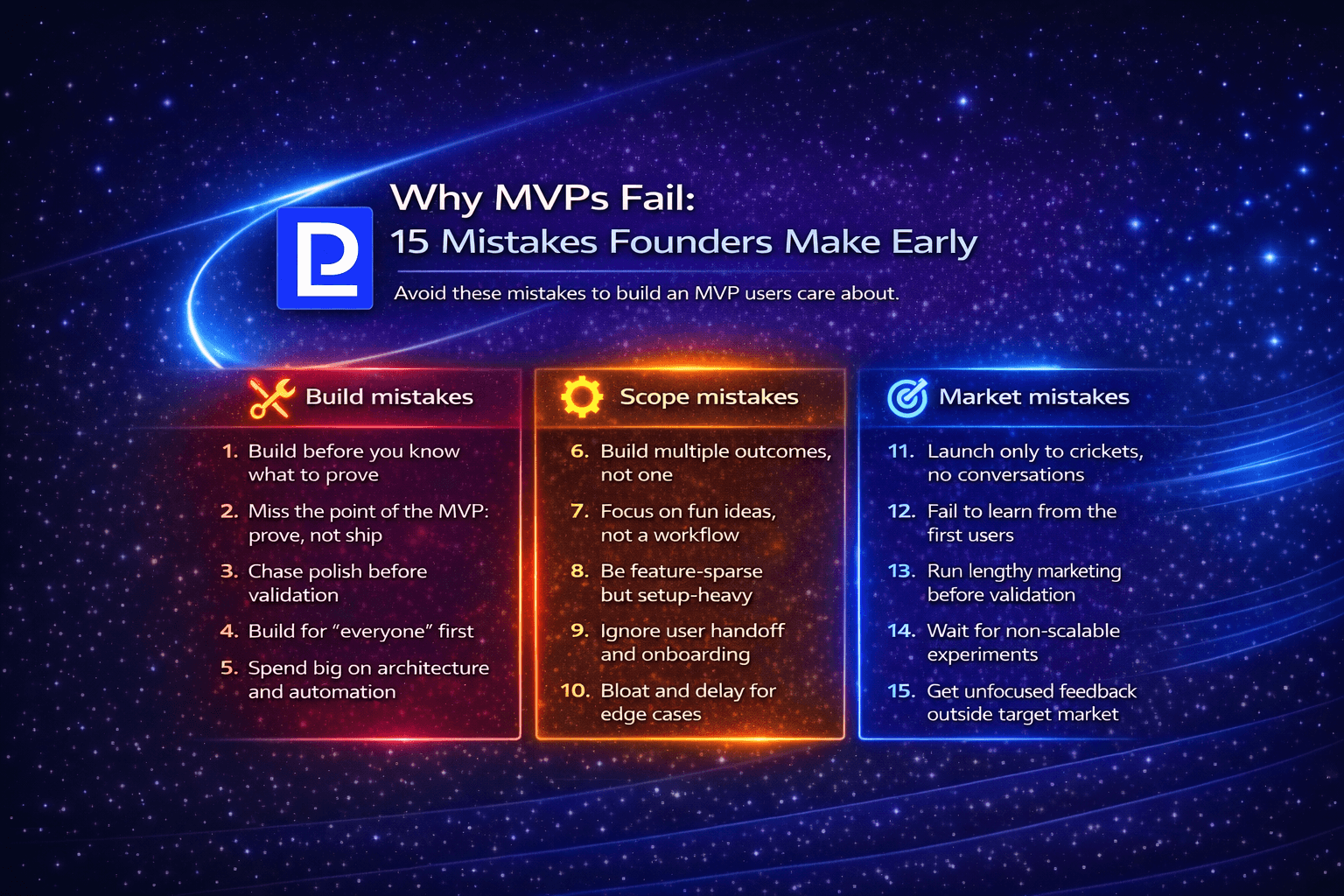
Why MVPs Fail: 15 Mistakes Founders Make Early
A founder-focused guide to the 15 most common MVP mistakes: what causes failure, how to avoid them, and how to build MVPs that actually validate.
Technology • 3 min
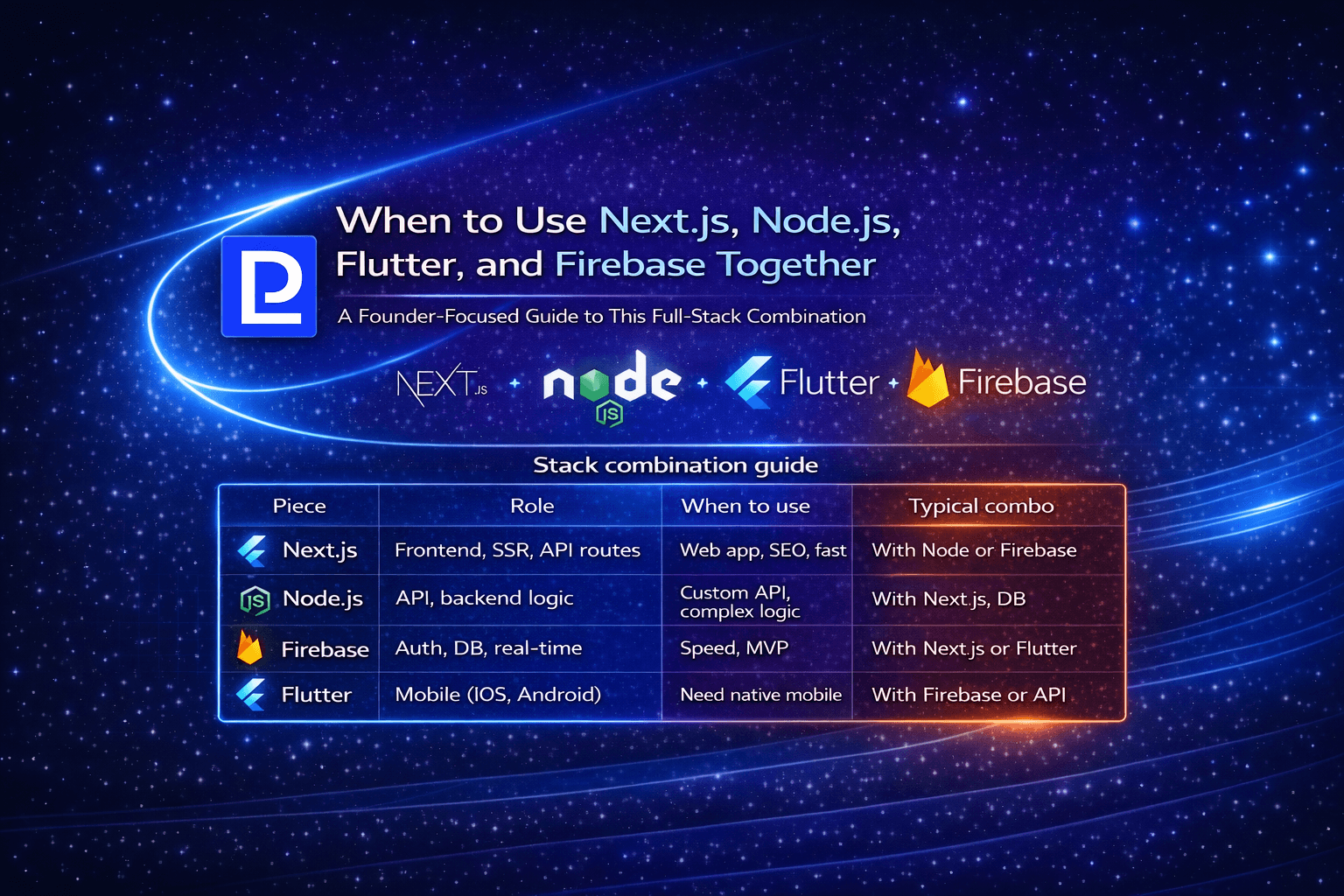
When to Use Next.js, Node.js, Flutter, and Firebase Together
A founder-focused guide to combining Next.js, Node.js, Flutter, and Firebase: when the stack makes sense and how to use them together.
Technology • 3 min
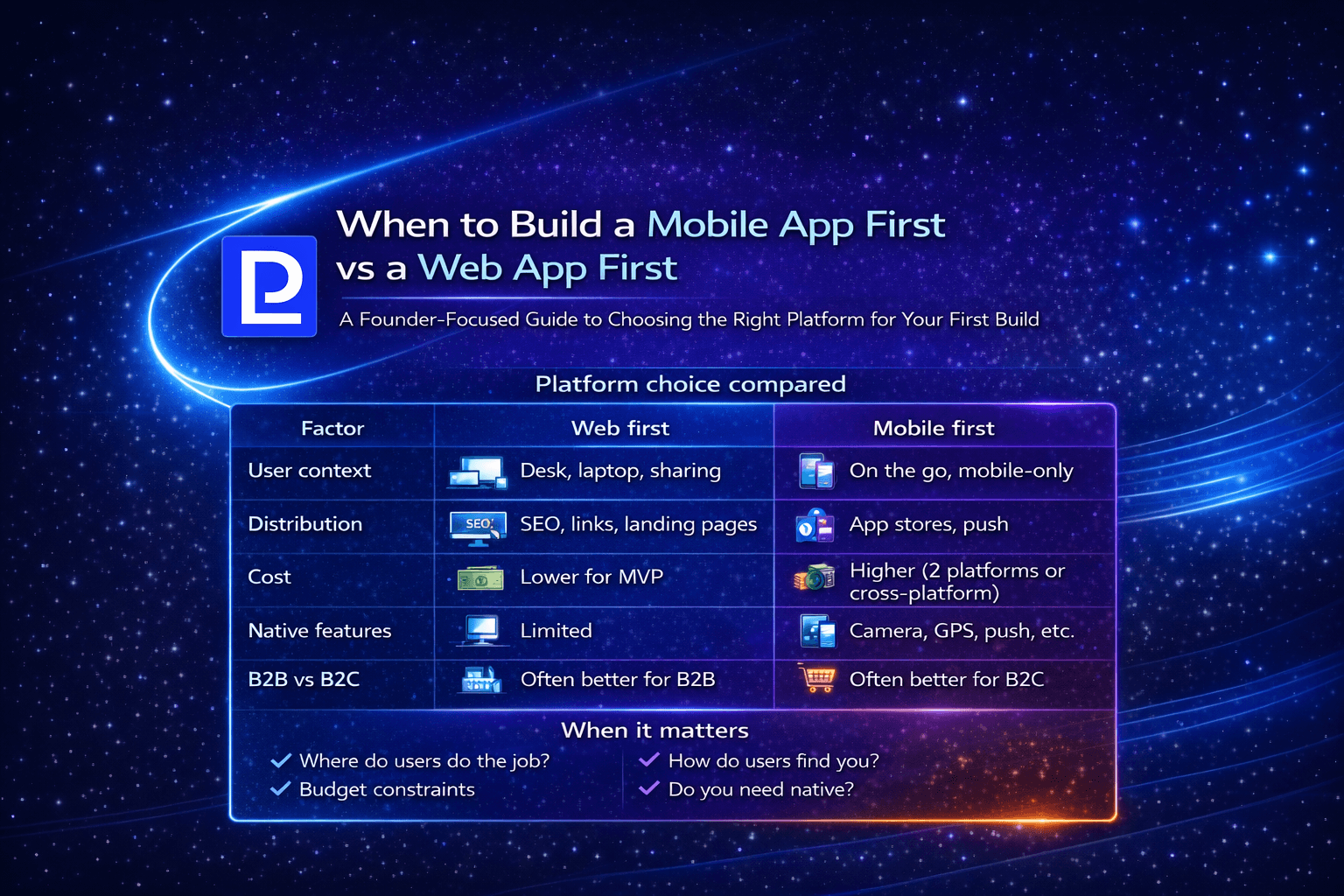
When to Build a Mobile App First vs a Web App First
A founder-focused guide to choosing mobile-first vs web-first: when each makes sense, tradeoffs, and how to decide for your product.